
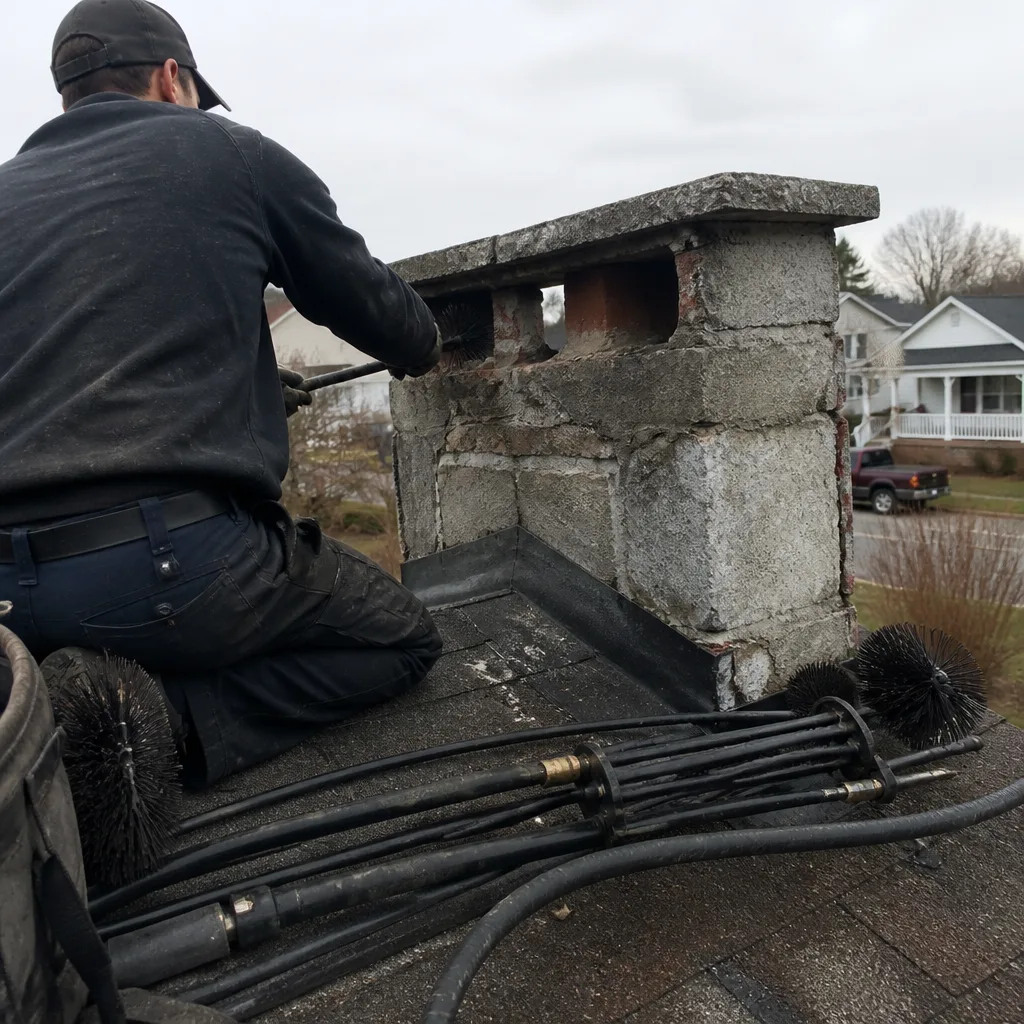
Level 1 sweep and inspection to the NFPA 211 annual standard - flue, crown, cap, and flashing checked and photographed
Chimney sweep logs do not sweep chimneys. They loosen some creosote - which then falls where a brush and vacuum still have to collect it.
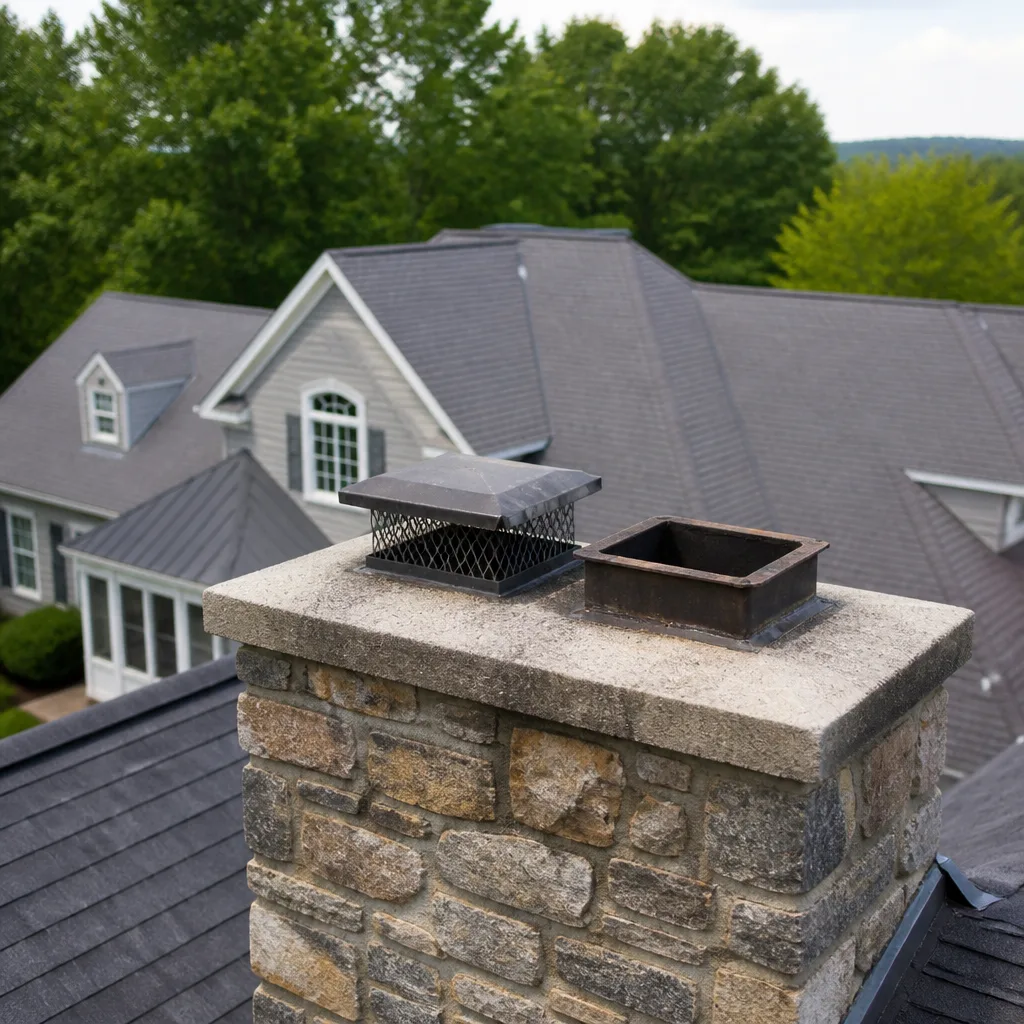
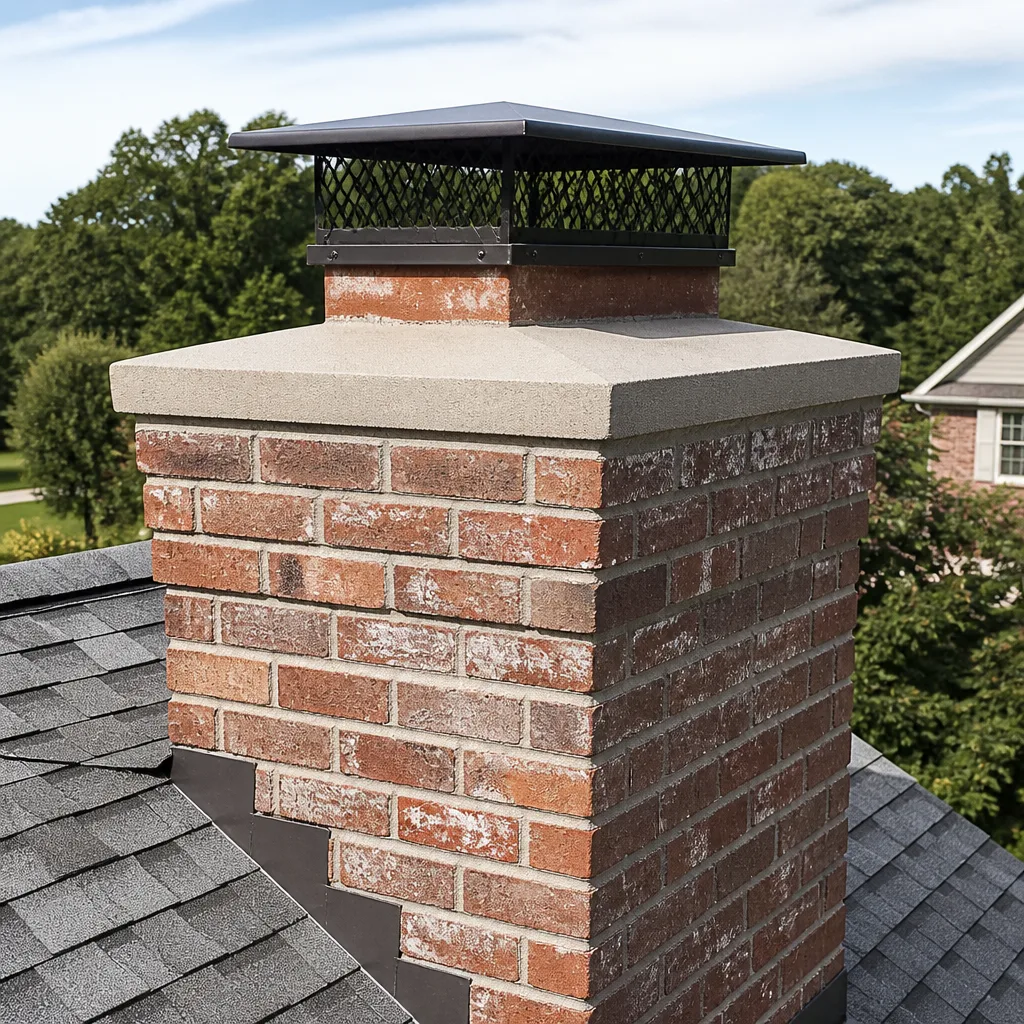
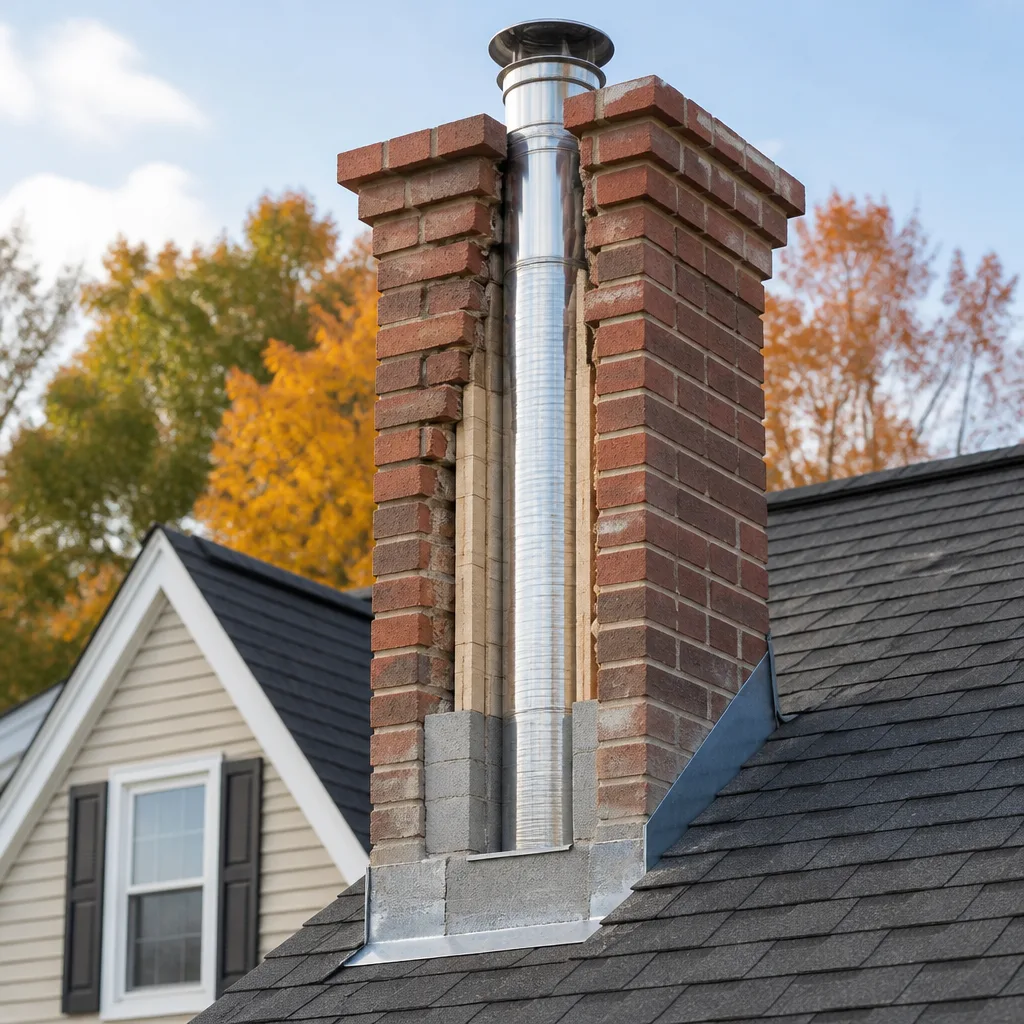
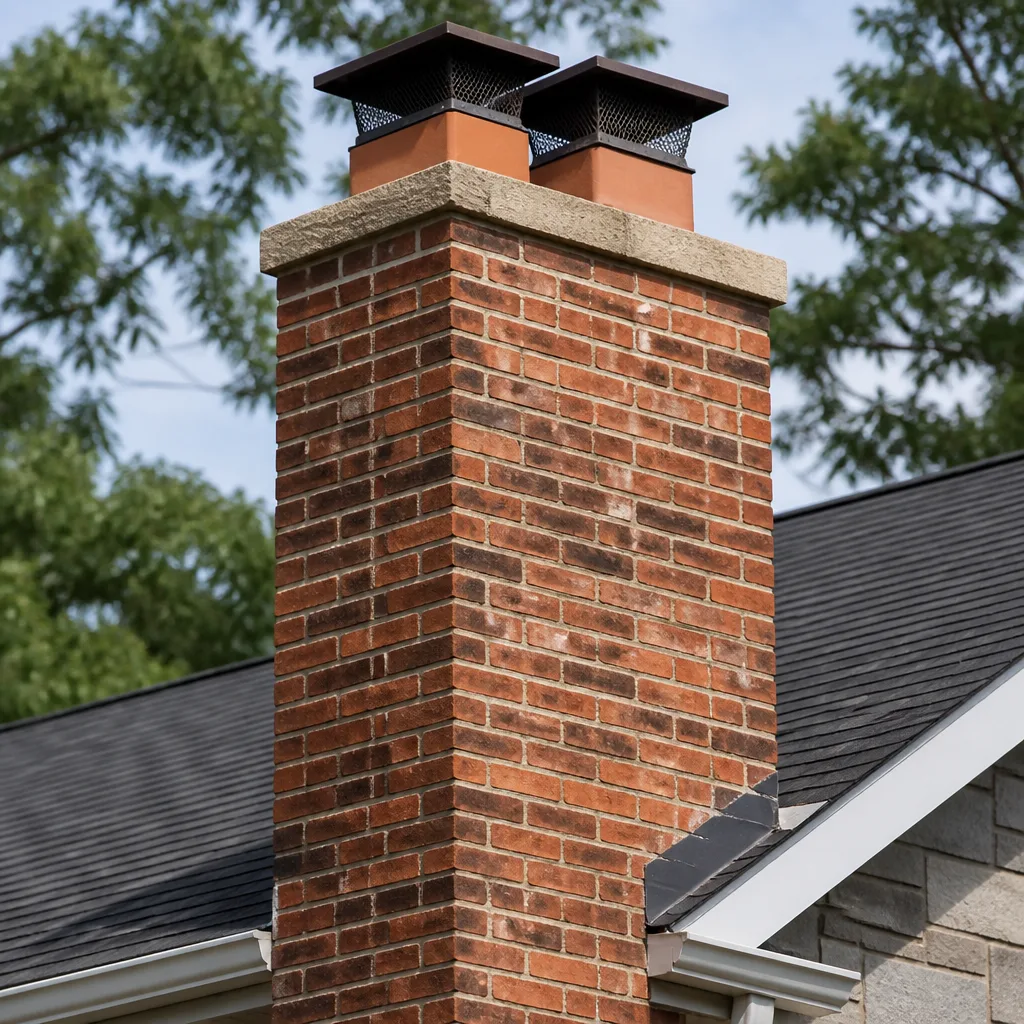
 Before
 After
After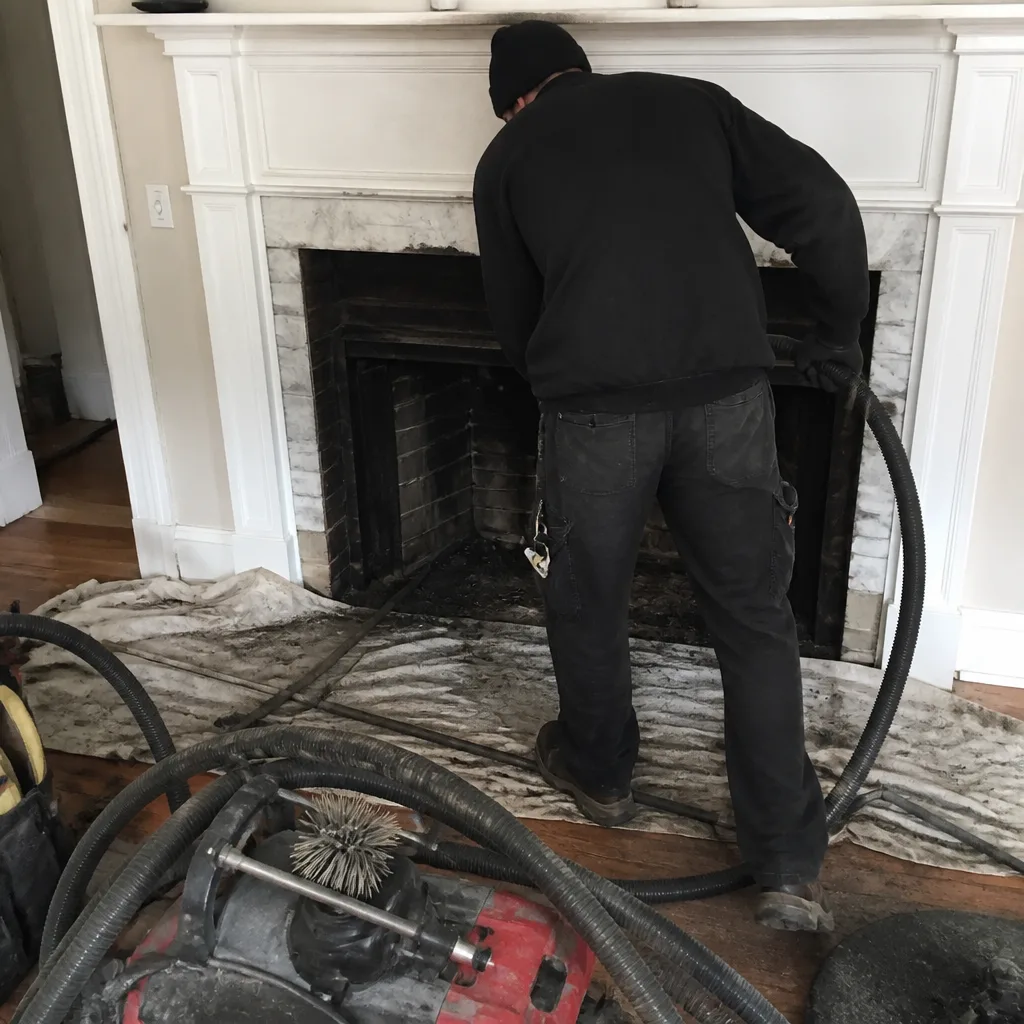 Before
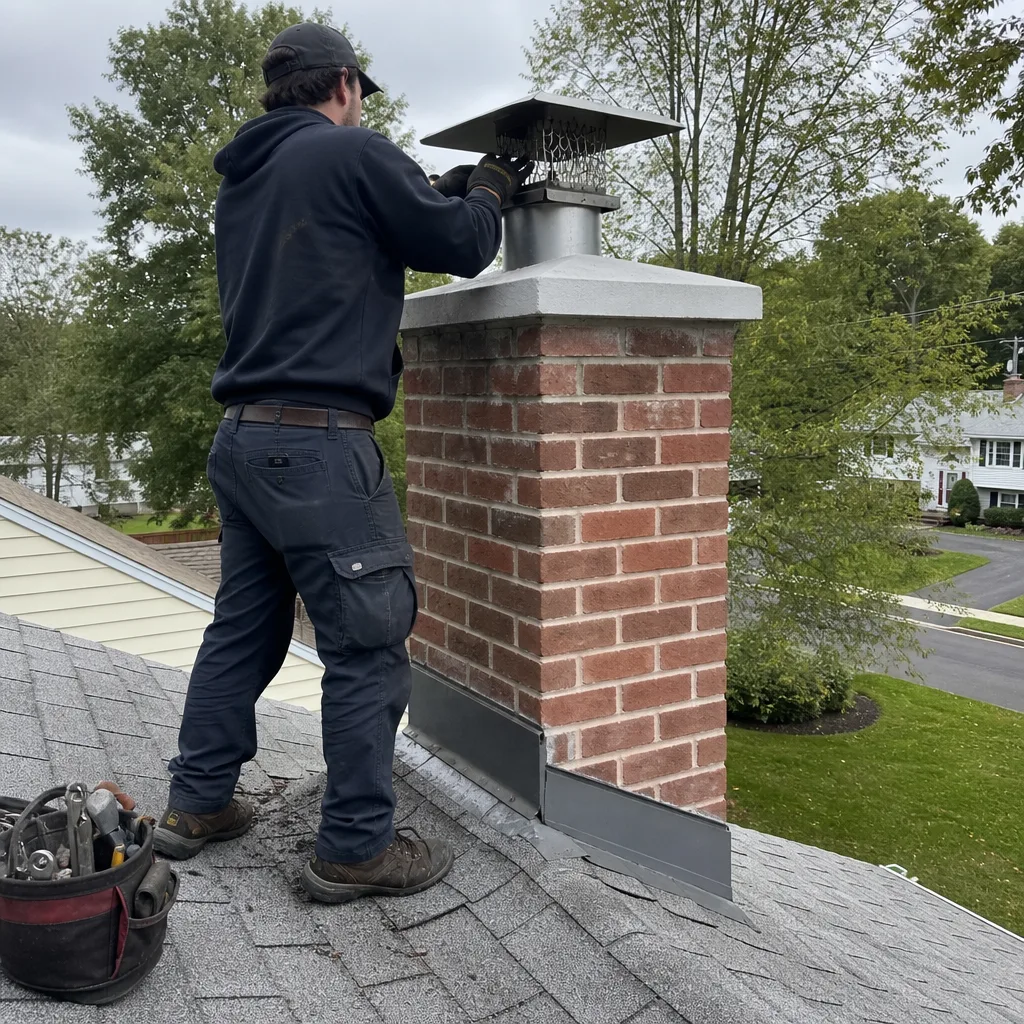 After
After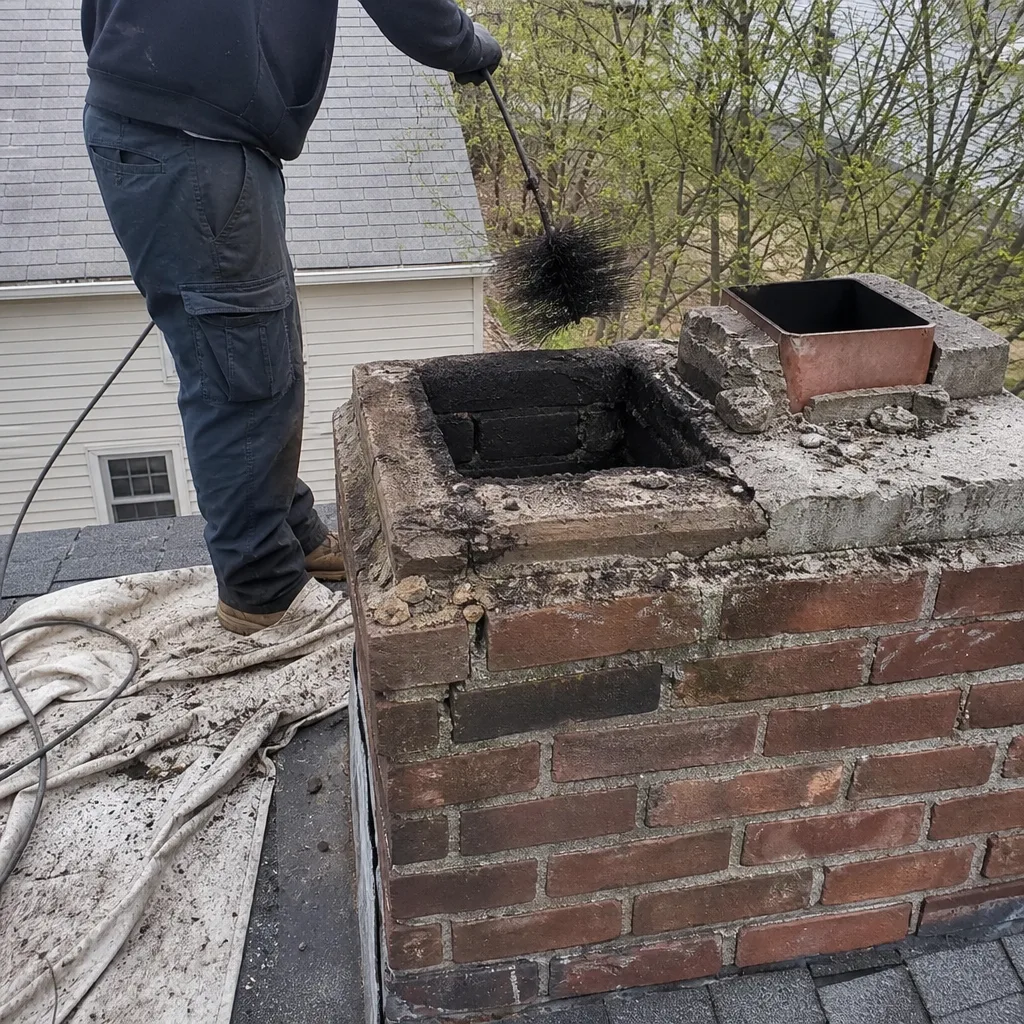 Before
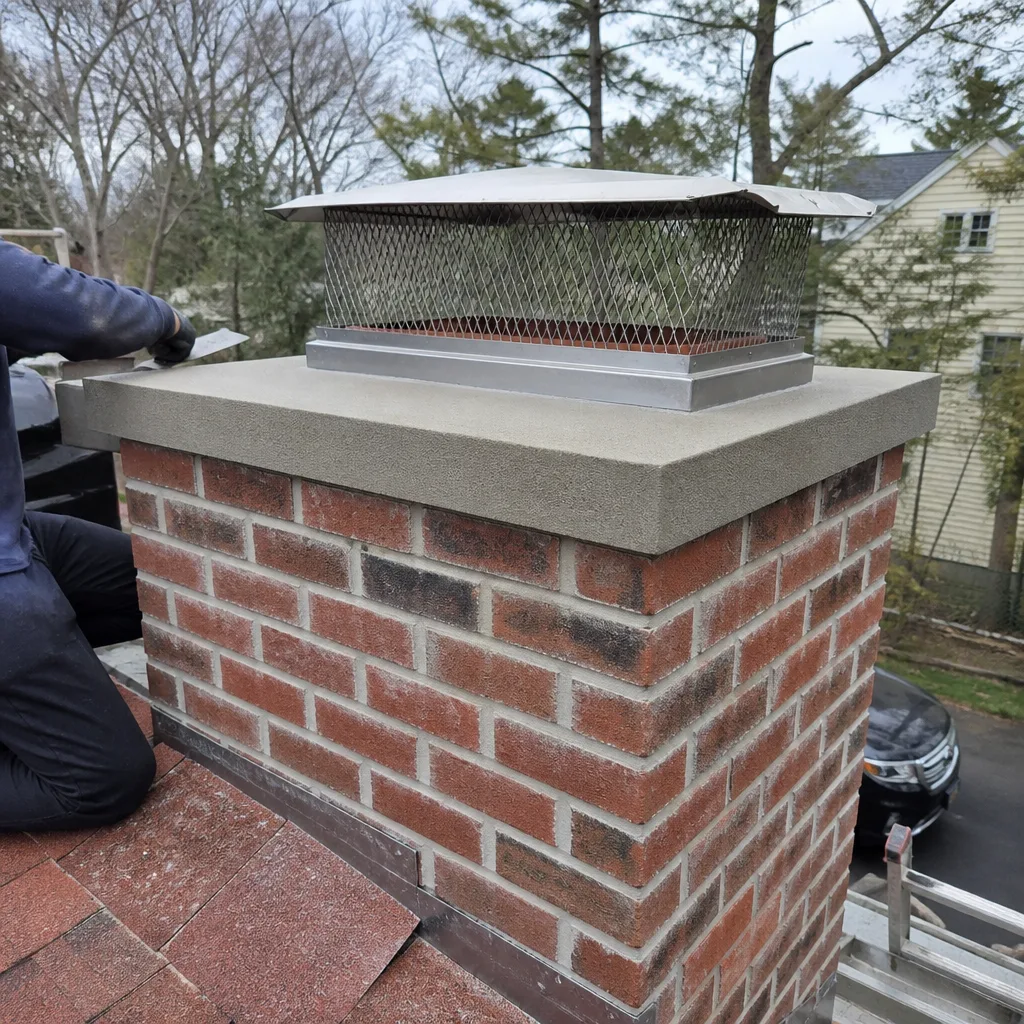 After
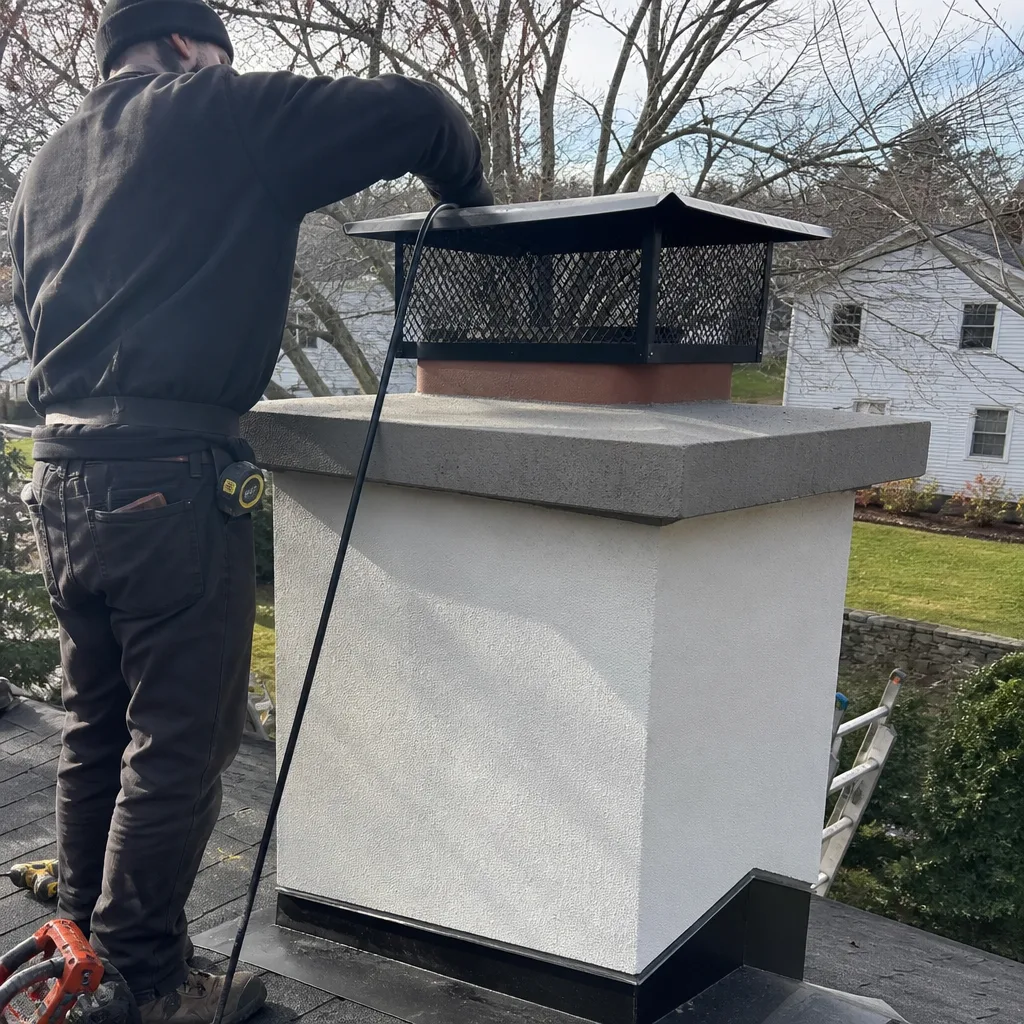
AfterHeatShield Chimney Cap Installation: The Norwalk Owner’s Guide
We stock and install HeatShield-compatible chimney cap assemblies across Norwalk, with most jobs running between $340 and $610 including the new cap, mounting hardware, and same-visit labor. That’s a real number, not a teaser. Owners usually find us two ways: they see rust streaks running down the chimney chase, or they hear rain hitting the damper during a spring storm and realize the old cap finally gave out. Either way, the fix is straightforward, and we can usually get it done the day we come out to look.
Which HeatShield Models This Applies To
HeatShield’s chimney cap line spans three main series: the standard single-flue caps, multi-flue covered caps, and the larger custom chase-top assemblies used on manufactured fireplaces. The single-flue units take either a 3-inch or 4-inch mesh screen collar that slips over the flue tile or liner stub. The chase-top versions bolt directly to the chimney crown and are made to fit chase tops from roughly 12 by 16 inches up to 24 by 36 inches. Where folks get into trouble is assuming the cap matches the chimney’s outside brick dimensions. It doesn’t. The cap has to match the inside flue opening or the chase-top frame, not the chimney’s exterior footprint.
When we arrive, we look for the HeatShield label on the underside of the cap skirt. If the label is gone, we measure the flue opening at its widest point with the old cap removed. HeatShield caps are generally not cross-compatible with the snap-together brackets used by Gelco or certain older Famco units, so we don’t try to force one onto the other’s mounting ring. For an OEM replacement, we order the exact HeatShield series and screen size. For homeowners who’d rather save a piece, there are quality aftermarket caps that fit well, but they need a proper inspection of the bolt pattern and the screen clip arrangement before they’re safe to use.
Signs Your HeatShield Chimney Cap Installation Is Failing
- Rust streaking down the chase. The cap’s powder coat has worn through or the stainless base is oxidizing. Once the coating separates, moisture gets under it and the cap starts working against itself. This is the most common thing we see on HeatShield caps older than eight years in Norwalk’s coastal air.
- Rain noise above the damper. The lid bolts have loosened, or the lid itself has shifted off-center. Water is getting straight down the flue. Let it sit and you’ll be looking at a rusted damper next year.
- Birds or squirrel activity around the chimney top. The screen mesh has holes big enough for a starling, or a gap at the base where the mesh meets the mounting band. Once birds are in, they bring debris that blocks air movement and holds moisture against the liner.
- Cap visibly tilted or lifted on one side. Often caused by high wind or a tree branch working the mounting screws loose. A tilted cap lets rain blow underneath at an angle, which defeats the whole point.
- Draft problems that appear suddenly. A cap that’s half-fallen inward or clogged with debris changes the flue’s draw. The fire starts fine, then smoke rolls back into the room in the middle of the burn. That’s a strong signal to look up.
Replacement Cost & What’s Included
In Norwalk, a HeatShield-compatible single-flue cap with standard mesh runs between $340 and $480 installed, depending on the flue size and whether the old cap fights us coming off. Multi-flue covered caps run $420 to $560. Chase-top replacements for manufactured units are the bigger-ticket jobs at $510 to $610 and up, because the work includes re-flashing and sealing the whole crown surface.
Every one of those numbers includes the new cap, stainless mounting hardware, sealant where it belongs, removal and haul-off of the old cap, and our labor to install and true the unit. Before we take anything off the truck, we price the job and tell you the exact number. The price on the quote is the price on the invoice. We’re an independent service company, not owned by or affiliated with HeatShield, so we don’t have to toe anybody’s corporate pricing line. Work is covered by the 90-Day Done Right Promise: if it’s not right, one call and Wendell comes back at no charge.
DIY or Call Us?
Some homeowners check their cap from the yard with binoculars, and that’s sensible. We’d rather you do that than climb a wet roof in October. What’s not safe is pulling the old cap yourself. Ladder work at chimney height, working with one hand while the other holds a drill over open flue tile, wrestling a corroded mounting ring loose with a pry bar all of it will get an experienced roofer hurt, and we say that from having repaired plenty of do-it-yourself attempts that ended with a bent cap and a cracked crown.
If you want to do a ground-level check: look at the chimney top for rust streaks, listen for animal noise just before dawn, and check the firebox for any suspicious moisture after heavy rain. Then call us at (475) 375-2748. Wendell or one of the crew will come out, take actual measurements, and tell you straight what needs replacing. If it doesn’t need doing, Wendell will tell you that too.
FAQs
In a coastal Fairfield County environment, we see most HeatShield caps give a real service life of 8 to 12 years before the screen mesh thins or the base rusts through. Caps on homes within a mile or two of the water tend to go faster because of salt air. The powder coating does most of the protecting in the first six years; after it breaks down, the base metal is on its own. Give us a call for an on-site check if your cap is past year eight.
Sometimes, but not as often as people hope. A loose lid or missing screen clip is a quick fix we can do in one visit. But a rusted base or a mesh screen with holes at the mounting rim means the cap’s structure is already compromised. Patching usually buys a season, not a solution. We’ll show you the cap before we offer the choice, and if repair is reasonable in our view, we’ll say so.
Most single-flue and multi-flue caps take between 45 minutes and an hour and a half, once the old cap is off and the mounting surface is clean. Chase-top replacements for larger manufactured units usually take two to three hours because they involve crown sealing and sometimes light masonry repair. Either way, we arrive with the parts on the truck for most jobs and finish the same day.
We stock the most common HeatShield-compatible sizes in our service truck inventory, including the standard 3-inch and 4-inch screen collars and the mid-sized chase-top bases. Less common sizes and custom chase-top assemblies get ordered directly, which generally takes under a week. We also carry parts from DuraFlex and Gelco for homes with mixed-brand setups.
If you’ve got a HeatShield cap that’s showing its age, or you’re not sure what’s up there, call (475) 375-2748 and we’ll set up a time. Free estimates in Norwalk, straight pricing, and a name that answers the phone.
Written by Wendell Pike, Owner, Top Hat Chimney at Top Hat Chimney, serving Norwalk and nearby areas.