
Level 1 sweep and inspection to the NFPA 211 annual standard - flue, crown, cap, and flashing checked and photographed
Chimney sweep logs do not sweep chimneys. They loosen some creosote - which then falls where a brush and vacuum still have to collect it.
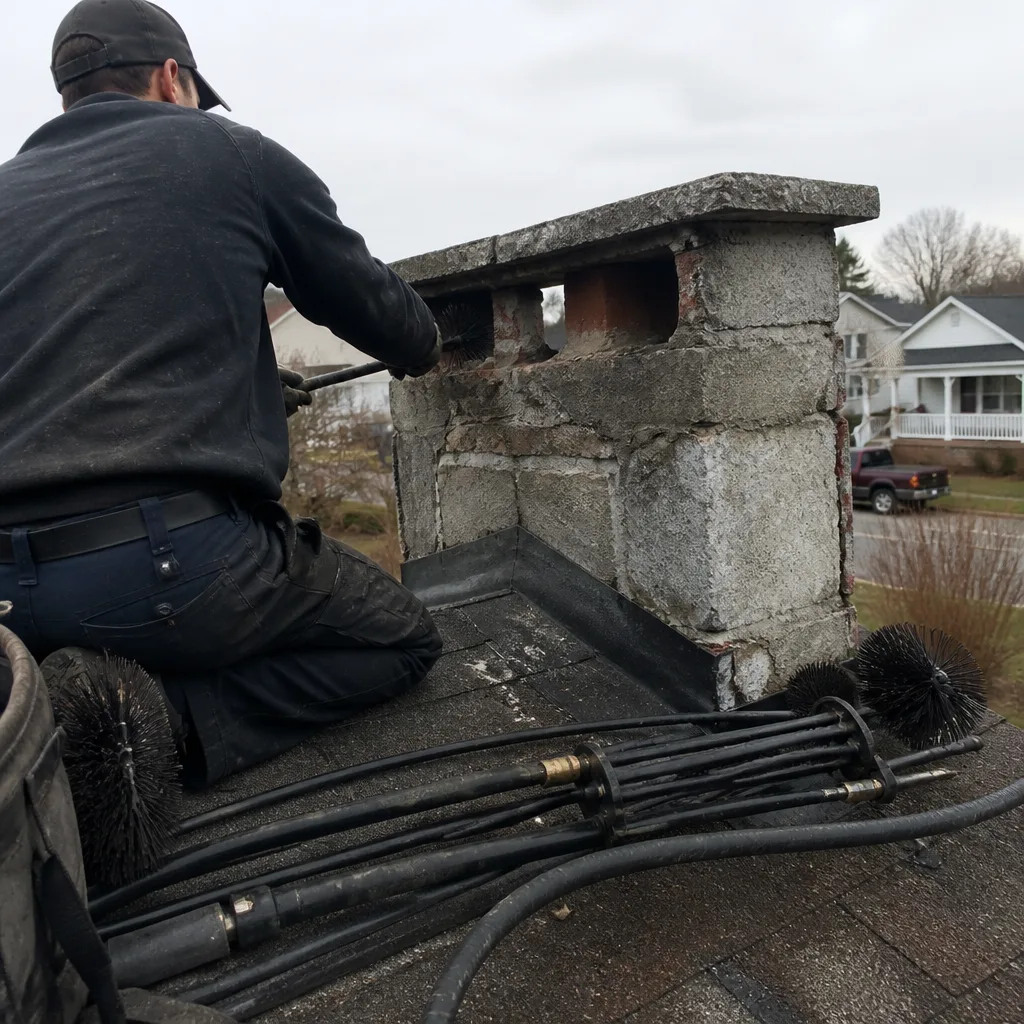 Before
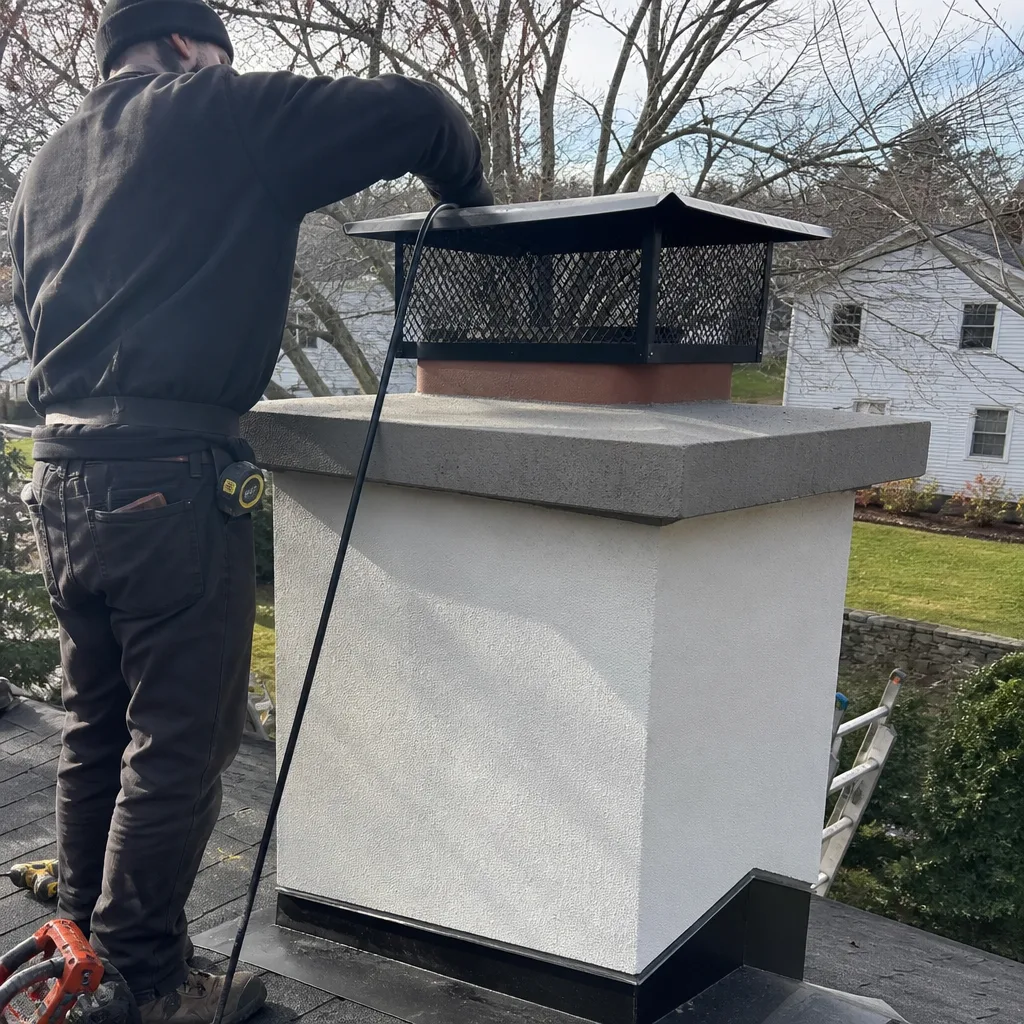 After
After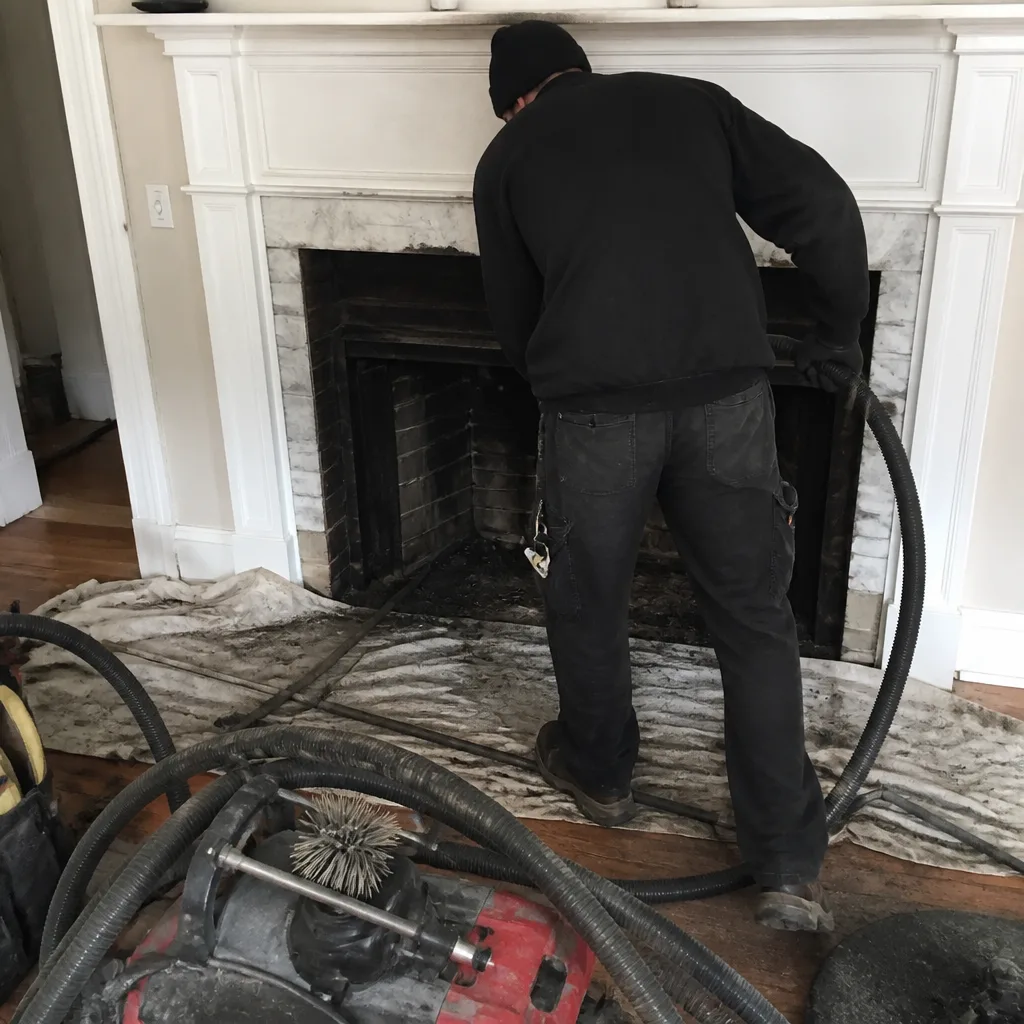 Before
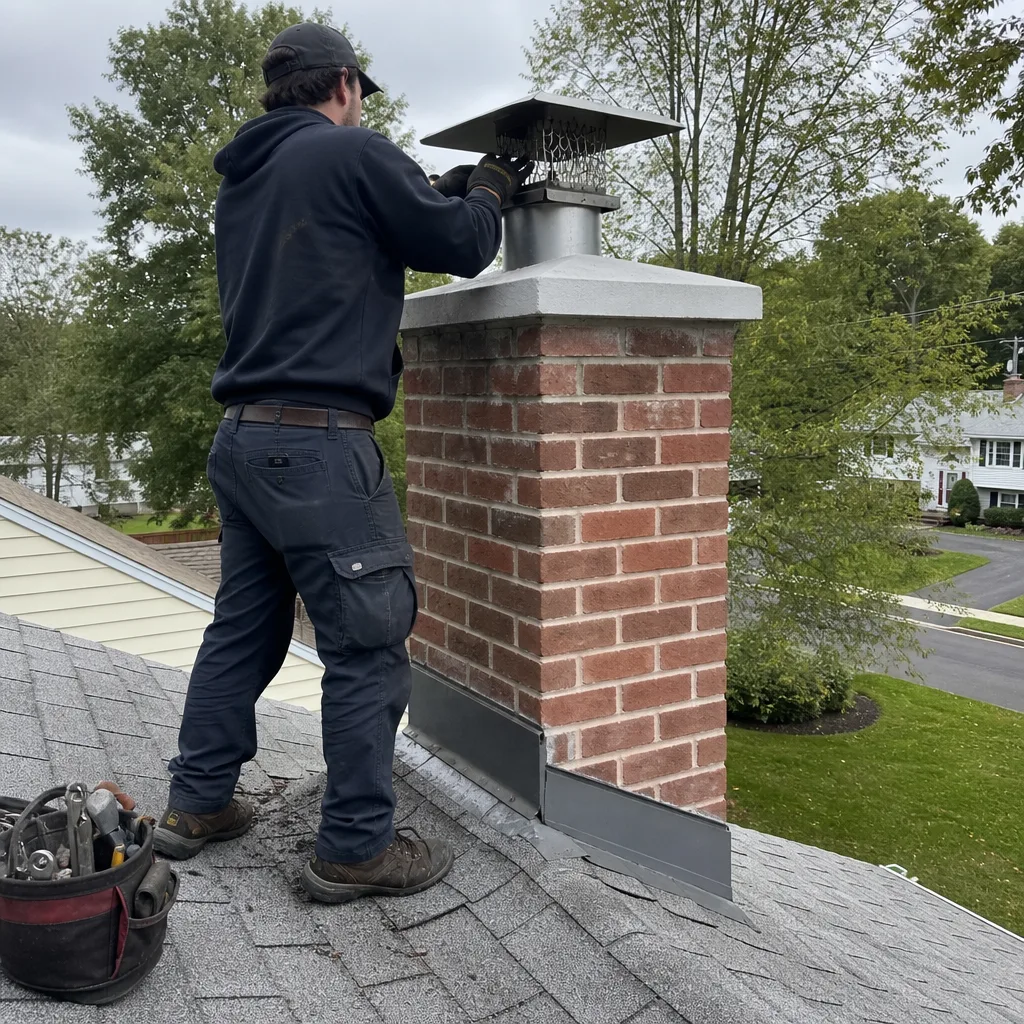 After
After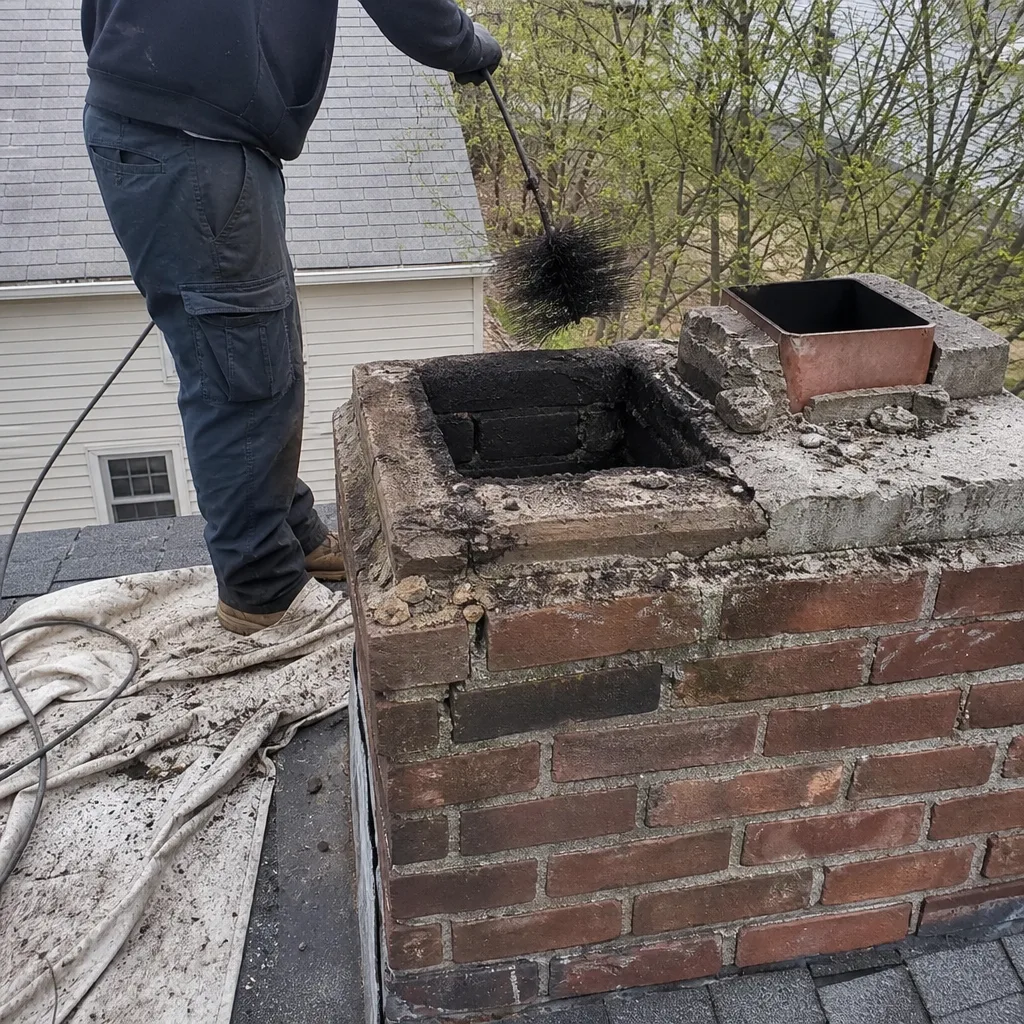 Before
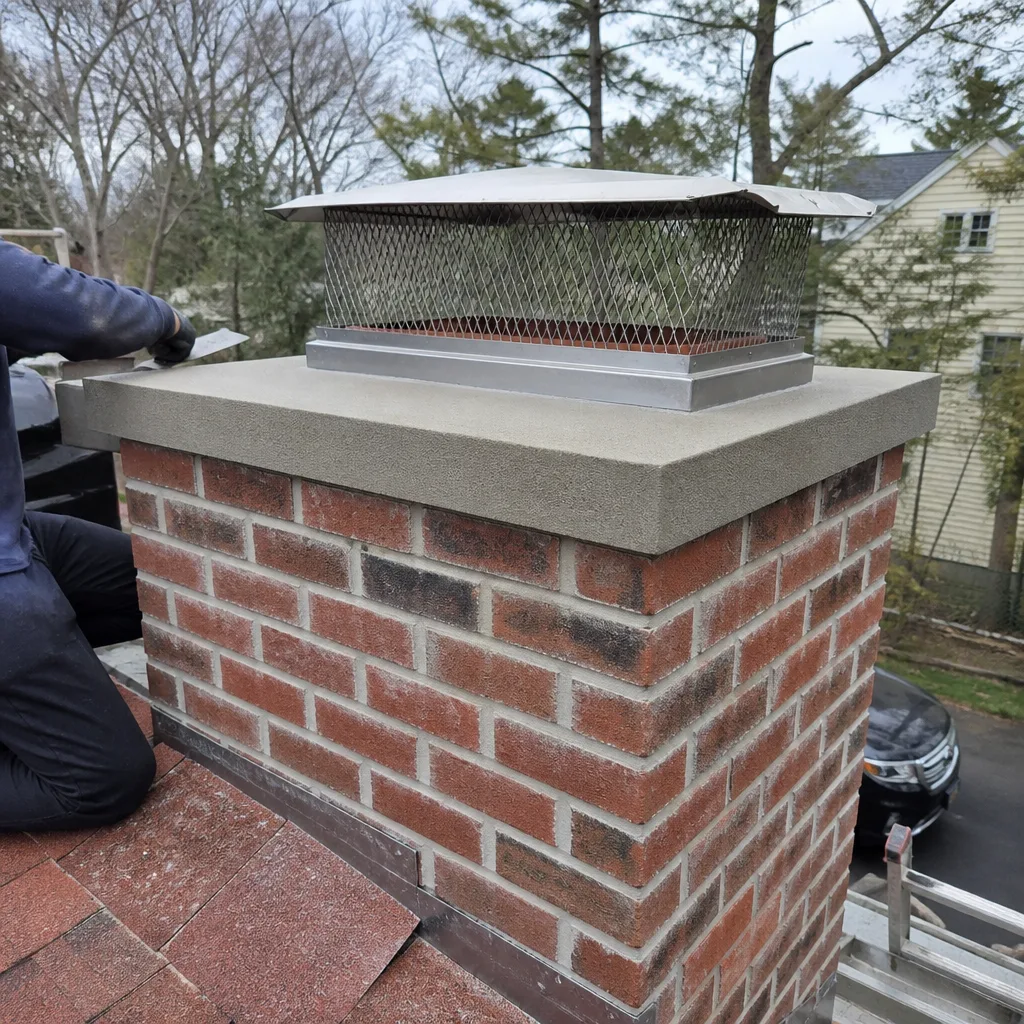 After
AfterSoot Removal in Norwalk, CT
Soot removal in Norwalk typically runs $130 to $280 depending on how much buildup is present and how accessible your flue is. Most jobs take between 45 minutes and two hours, and Wendell can usually get out to you the same week – often the same day if you call before noon. If you’d like to understand the full scope of what goes into keeping a chimney healthy, start with our Chimney Cleaning & Sweep in Norwalk page, which covers the broader process from crown to firebox.
Soot is different from creosote, and that distinction matters. Creosote is the sticky, tar-like residue from incomplete combustion – the stuff that causes chimney fires. Soot is the fine, powdery black carbon that settles on every surface the smoke touches: the firebox walls, the smoke shelf, the damper frame, and the lower flue tiles. It’s lighter than creosote and easier to remove, but don’t let that fool you into thinking it’s harmless. Heavy soot deposits restrict airflow, throw off your draft, and – when they get wet, which they do in Norwalk’s wet winters – they become mildly acidic and eat into mortar joints over time. Catch it once a year with Annual Sweep and it’s a brush job. Ignore it for a few seasons and you’re looking at liner damage and masonry repair.
Wendell Pike has been doing this work in Fairfield County since 1999. He’s seen the insides of thousands of chimneys across Norwalk, Darien, Westport, and the surrounding towns. When he shows up at your door, you’re getting the person whose name is on the truck, not a subcontractor from three counties over. Call (475) 375-2748 – a live person picks up, and it may well be Wendell himself.
When You Need Soot Removal
- Your fires are hard to start or won’t draw properly. A heavy soot layer narrows the flue opening and disrupts the column of rising warm air that pulls smoke up and out. If you’re fighting your fires more than usual, that’s often the first sign.
- You notice a sharp, acrid smell coming from the fireplace. In Norwalk’s humid summers – especially in neighborhoods close to Long Island Sound like Rowayton and East Norwalk – moisture seeps into the flue and activates dormant soot deposits. The smell gets into the living room even when the fireplace hasn’t been used in months.
- There’s visible black dusting on the firebox face or hearth. Fine soot that’s migrating out of the firebox means there’s likely a draft or sealing problem, and the buildup inside is thick enough to push particles out under pressure.
- It’s been more than a year since your last sweep. Once a year, burn or no burn. Chimneys deteriorate in the off-season – birds nest, mortar cracks, and soot oxidizes and hardens whether you lit a fire or not.
- You just bought a house in Norwalk with a fireplace of unknown history. West Norwalk, Wolfpit, and the older colonial-era neighborhoods near Silvermine have homes with original masonry chimneys that haven’t been properly maintained in years. A soot removal and inspection before first use is non-negotiable.
- Your previous sweep used a visual-only inspection and skipped the camera. If nobody ran a camera through your flue last time, you don’t actually know what’s in there. Soot buildup can be hiding a cracked tile or a deteriorating smoke chamber that a flashlight from below won’t reveal.
Our Soot Removal Process
- Arrival and setup. The sweep who shows up at your door arrives in uniform, introduces himself, and walks through the job with you before anything comes off the truck. Drop cloths go down across your hearth area and on the floor in front of the fireplace. We use negative-pressure containment – a HEPA-filtered vacuum system that creates suction at the firebox opening so that soot and dust travel into the collection unit rather than into your living room. Norwalk homes, especially the older Victorians and Cape Cods along Gregory Boulevard and North Taylor Avenue, often have smaller hearth openings that require extra care with setup.
- Firebox and smoke chamber cleaning. Starting at the bottom, Wendell clears soot from the firebox walls, the smoke shelf (the ledge above the damper that catches falling debris), and the smoke chamber walls. The smoke chamber takes specific brushes to reach the corbelled curves that direct smoke into the flue. This step alone accounts for most of the mess in an older masonry system, and skipping it or rushing it is where a lot of cheaper sweeps cut corners.
- Flue brushing from the top down. Using chimney brushes sized to your flue’s interior dimensions – round, square, or rectangular – Wendell works from the chimney crown downward, loosening soot from the tile or liner walls. We work with quality brushes and rods from suppliers like Copperfield and Olympia Chimney; the right size brush matters because an undersized one leaves ridges of buildup along the edges. All dislodged material falls into the containment system below.
- Vacuum extraction and final debris removal. Once the brushing is done, the HEPA vacuum completes its run, pulling fine particles out of suspension before we break containment. The firebox floor is then cleared of any remaining ash or soot that settled during brushing. We bag and remove all debris – nothing left in the fireplace for you to deal with.
- Camera inspection of the flue. Every cleaning gets a camera run. Soot removal without a post-clean inspection tells you the surface is clean but nothing about what’s underneath – cracked tiles, spalling mortar, deteriorating liner joints. The camera footage is real, and Wendell will walk you through what he sees in plain English. No upsell pressure; if the liner looks fine, he’ll tell you it looks fine.
- Written report and 90-Day Done Right Promise. Before Wendell leaves, you get a written summary of what was cleaned, what the camera found, and any recommendations. Every job – every single one – is backed by the 90-Day Done Right Promise. If something wasn’t done right, one call brings him back at no additional cost. That’s in writing, not just a verbal assurance.
Soot Removal Pricing in Norwalk
Soot removal in Norwalk costs $130 to $280 for a standard single-flue fireplace. The range is real – what pushes a job toward the higher end is the depth of buildup, the height of the chimney, accessibility from the rooftop, and whether significant soot has packed into the smoke chamber or smoke shelf. Here’s a general breakdown:
| Scope of Work | Typical Price Range |
|---|---|
| Light soot, single flue, recent prior cleaning | $130 – $165 |
| Moderate soot, single flue, smoke chamber included | $165 – $220 |
| Heavy soot buildup, multiple seasons of neglect | $220 – $280 |
| Second flue (same visit) | Add $80 – $120 |
| Camera inspection (included with full cleaning) | Included |
Upfront pricing is how we’ve operated since 1999. The number you hear on the phone is the number on the invoice. No one shows up and discovers a “mandatory service upgrade” after he’s already set up in your living room – that’s a practice Wendell has zero patience for, and it’s unfortunately common with the national chains that cycle through Norwalk.
If any repair comes out of the inspection and it runs over $200, you get $40 off automatically. Seniors and veterans always get 10% off. And if you’ve already got a competing written estimate, bring it – Wendell will give you a free second opinion before you commit to anything.
Estimates are free and carry no obligation. Call (475) 375-2748 or search Chimney Cleaning & Sweep Near Me in Norwalk, CT to get an exact quote for your specific chimney.
What Soot Does to a Norwalk Home Over Time
Norwalk’s climate creates a particular set of problems for chimneys. The proximity to the Sound means humidity stays elevated even in months when you’d expect things to dry out. Soot, when it absorbs that moisture, converts to a weak sulfurous acid. In a flue lined with clay tile – which covers the majority of homes built in Norwalk before the 1990s – that acid slowly degrades the mortar between tile sections. The tiles themselves can begin to spall. At a certain point, you’re not talking about a cleaning anymore; you’re talking about a liner replacement with a system like DuraFlex flexible stainless liner, which runs considerably more.
That’s not a sales pitch. That’s the actual progression Wendell sees in chimneys that went five, six, seven years without a cleaning in neighborhoods like Cranbury, Springdale, and South Norwalk. The correction is simple: clean it once a year, know what you’re dealing with, and small problems stay small. The camera footage and a plain-English verdict – every time, no exceptions.
Soot also matters from a draft perspective. Long Island Sound generates prevailing southwest winds that push back against chimney openings facing that direction. A clean flue handles wind pressure better than a partially restricted one. Homeowners in East Norwalk and along the waterfront near Calf Pasture Beach sometimes report persistent smoke spillback into the room – and while that can have structural causes, restricted flue area from soot buildup is frequently a contributing factor that gets overlooked.
Soot vs. Creosote: Knowing the Difference
They often appear together, but they are not the same thing and they don’t respond to the same tools.
- First-degree soot and creosote: Dry, powdery, and gray to black. Standard chimney brushing removes it without much resistance. This is what you’re hoping for when you schedule an annual cleaning.
- Second-degree creosote: Flaky, crunchy, and darker. Still removable with brushing, though it takes more passes and the right brush stiffness. If you’ve been burning wet or green wood – common in the rural and semi-rural areas west of Norwalk toward New Canaan – this is likely what you’ve accumulated.
- Third-degree creosote: A glazed, tar-like coating that standard brushing cannot remove. It requires chemical treatment and, in serious cases, professional evaluation of the liner itself. This is also a serious fire risk – a chimney fire in a third-degree creosote flue burns at temperatures that can crack tiles and ignite framing. Wendell will tell you clearly if he finds it and what the options are. He will not pretend it’s a simple brush job.
Soot removal addresses the first two categories in the firebox and lower flue. If camera footage shows third-degree glazing higher up, that’s a separate conversation – but one worth having before you light another fire.
FAQs – Soot Removal in Norwalk
How often does soot need to be removed from a fireplace in Norwalk?
Once a year is the right answer for any fireplace that sees regular use. The Chimney Safety Institute of America recommends annual inspections regardless of use frequency, and Norwalk’s humid climate accelerates the acidic damage that soot causes when it sits wet through the off-season. Even if you only burned a handful of fires last winter, schedule a cleaning before the next heating season – ideally late summer or early fall before the October rush. Call (475) 375-2748 to get on the schedule early.
Can soot removal be done as a DIY project?
The firebox face and the visible interior walls can be wiped down with the right products, and that’s fine. But thorough soot removal – the smoke shelf, smoke chamber, and flue – requires professional brushes, a properly sized rod system, and HEPA containment to keep the material from spreading through your home. More importantly, without a camera inspection, you have no way of knowing whether there’s tile damage or a liner problem behind the soot. A DIY surface wipe tells you the wall looks clean; it tells you nothing about what’s coming next season.
What does soot removal cost in Norwalk, CT?
Most single-flue soot removal jobs in Norwalk run between $130 and $280, with the camera inspection included. Light buildup with a recent prior cleaning lands at the lower end; heavy accumulation from multiple missed seasons or a large smoke chamber sits closer to the top of that range. The number you’re quoted on the phone is what you pay – no adjustments at the door. Call (475) 375-2748 and Wendell can give you a more accurate estimate once he knows the chimney’s height, flue type, and last service date.
Will soot removal fix my smoke spillback problem?
It depends on what’s causing the spillback. If restricted flue area from soot buildup is the main factor, a thorough cleaning often makes a noticeable difference right away. But smoke spillback in Norwalk homes also comes from negative air pressure inside tightly insulated modern homes, oversized fireplace openings relative to flue size, or damper issues – none of which a brush alone will fix. Wendell will tell you exactly what the camera shows and whether the cleaning resolved it or whether there’s a separate issue worth addressing. No guesswork, no second trip charged if the answer changes.
Key Takeaways
- Soot removal in Norwalk runs $130 to $280 for a single flue, with camera inspection included.
- Annual cleaning prevents acidic soot damage to clay tile liners – especially important in Norwalk’s humid coastal climate.
- The process covers the firebox, smoke shelf, smoke chamber, and full flue – not just the visible walls.
- Every job is backed by the 90-Day Done Right Promise in writing.
- Wendell Pike has been working Fairfield County chimneys since 1999 – he’s not a franchise, and he’s not going anywhere.
- Seniors and veterans receive 10% off. Any repair over $200 saves you $40 automatically.
- Call before noon and same-day service is often possible.
Schedule Your Soot Removal in Norwalk
If your fireplace is due for a cleaning – or overdue – call (475) 375-2748 and a live person picks up, any hour of the day. Estimates are free, pricing is upfront, and every job comes with the 90-Day Done Right Promise. Wendell and his crew serve all of Norwalk and the surrounding Fairfield County communities, and there’s no trip charge for calls within the service county. For a full picture of what a professional chimney cleaning involves from top to bottom, visit our home page or go straight to the parent service page for Chimney Cleaning & Sweep in Norwalk.
Ask anyone on your street. Top Hat Chimney has been doing this work in Fairfield County since 1999, and that’s not something you get from a franchise that rotated in last spring.
Written by Wendell Pike, Owner at Top Hat Chimney, serving Norwalk.