
Level 1 sweep and inspection to the NFPA 211 annual standard - flue, crown, cap, and flashing checked and photographed
Chimney sweep logs do not sweep chimneys. They loosen some creosote - which then falls where a brush and vacuum still have to collect it.
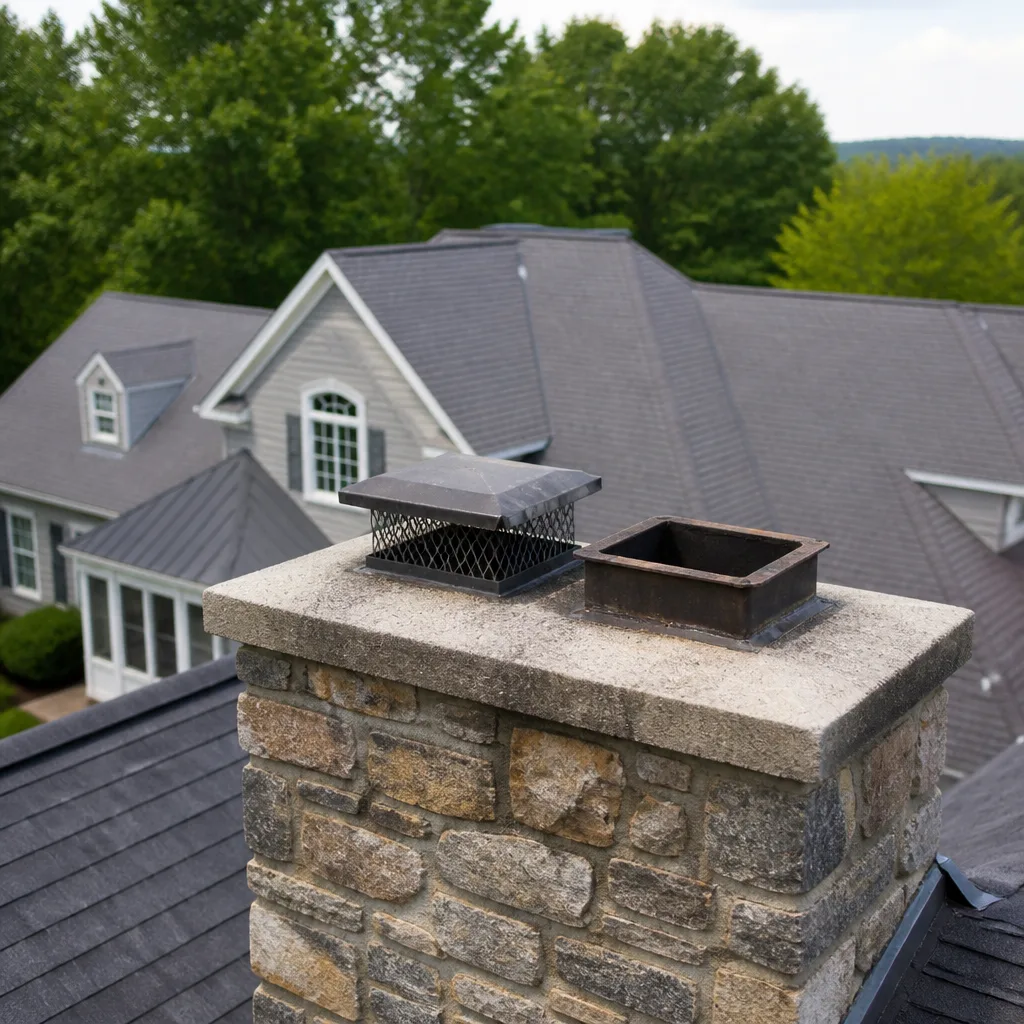
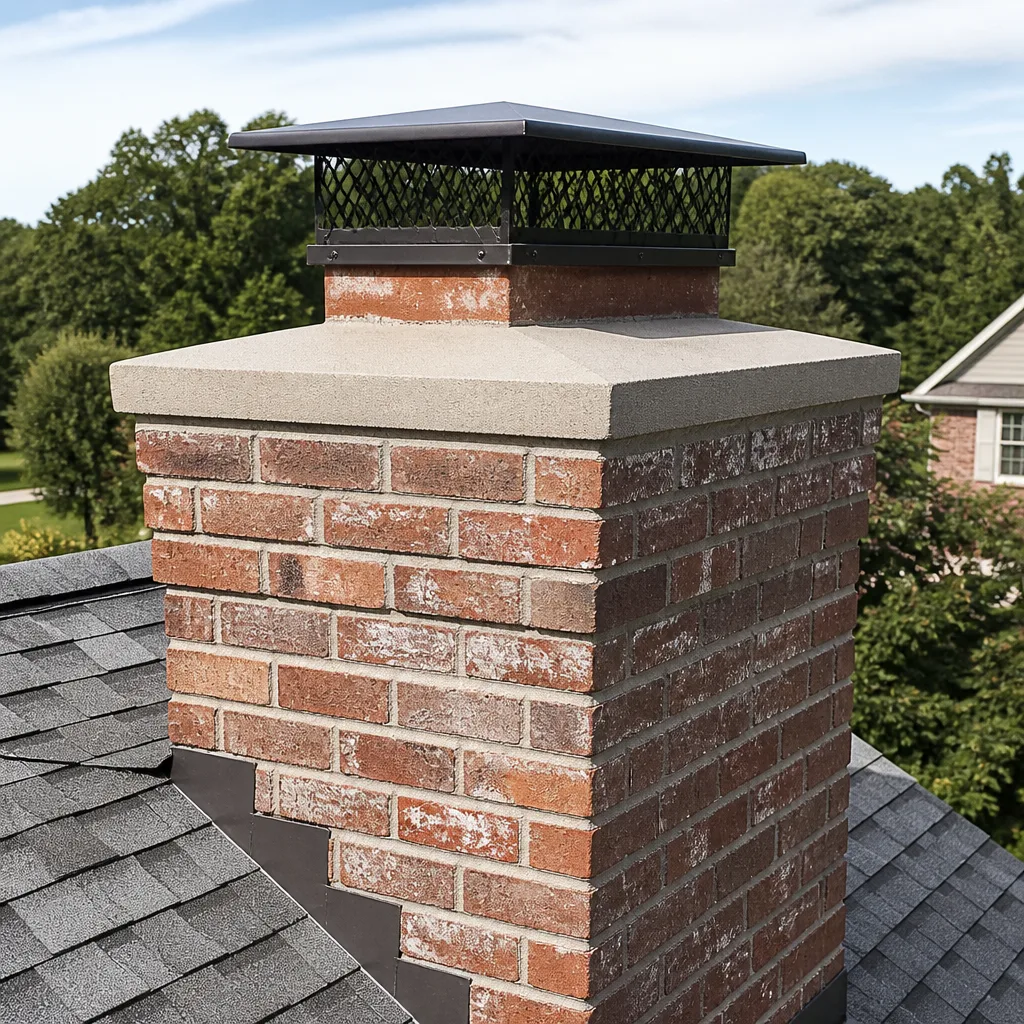
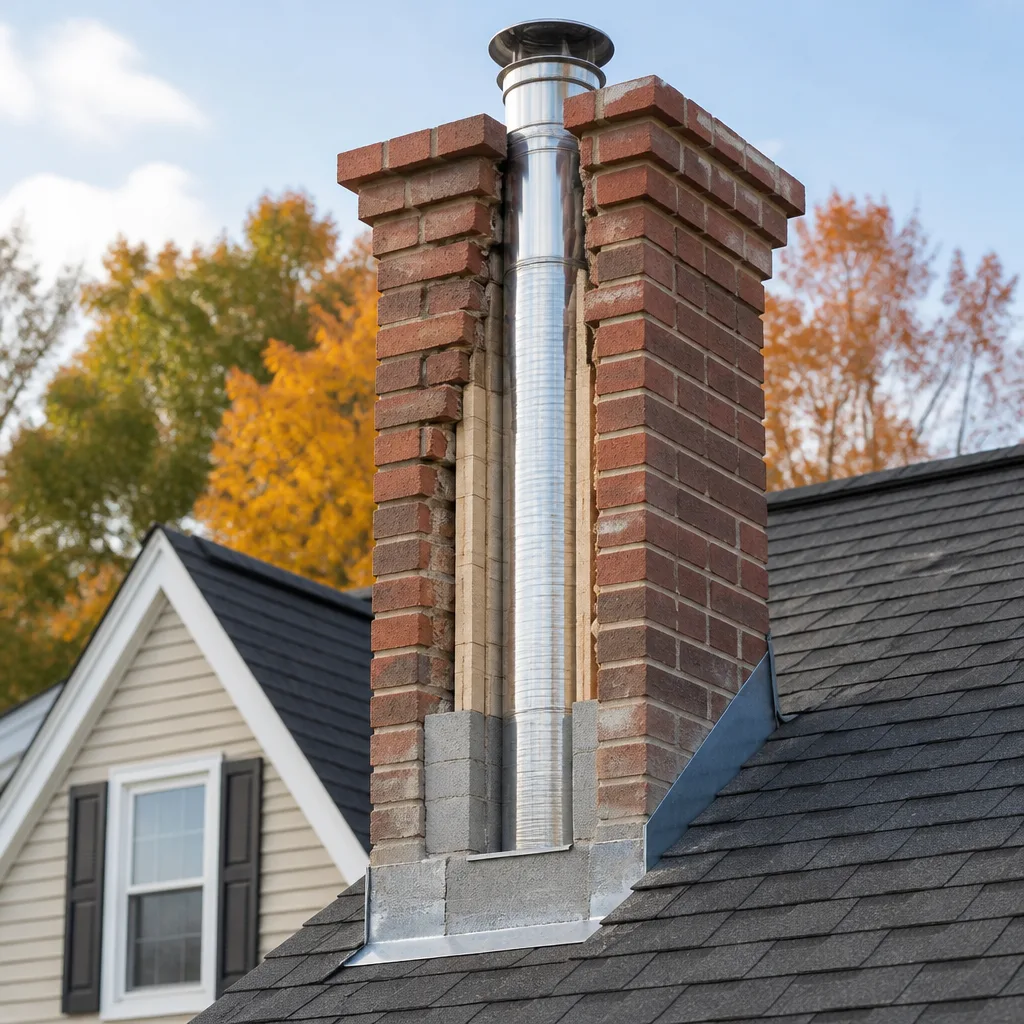
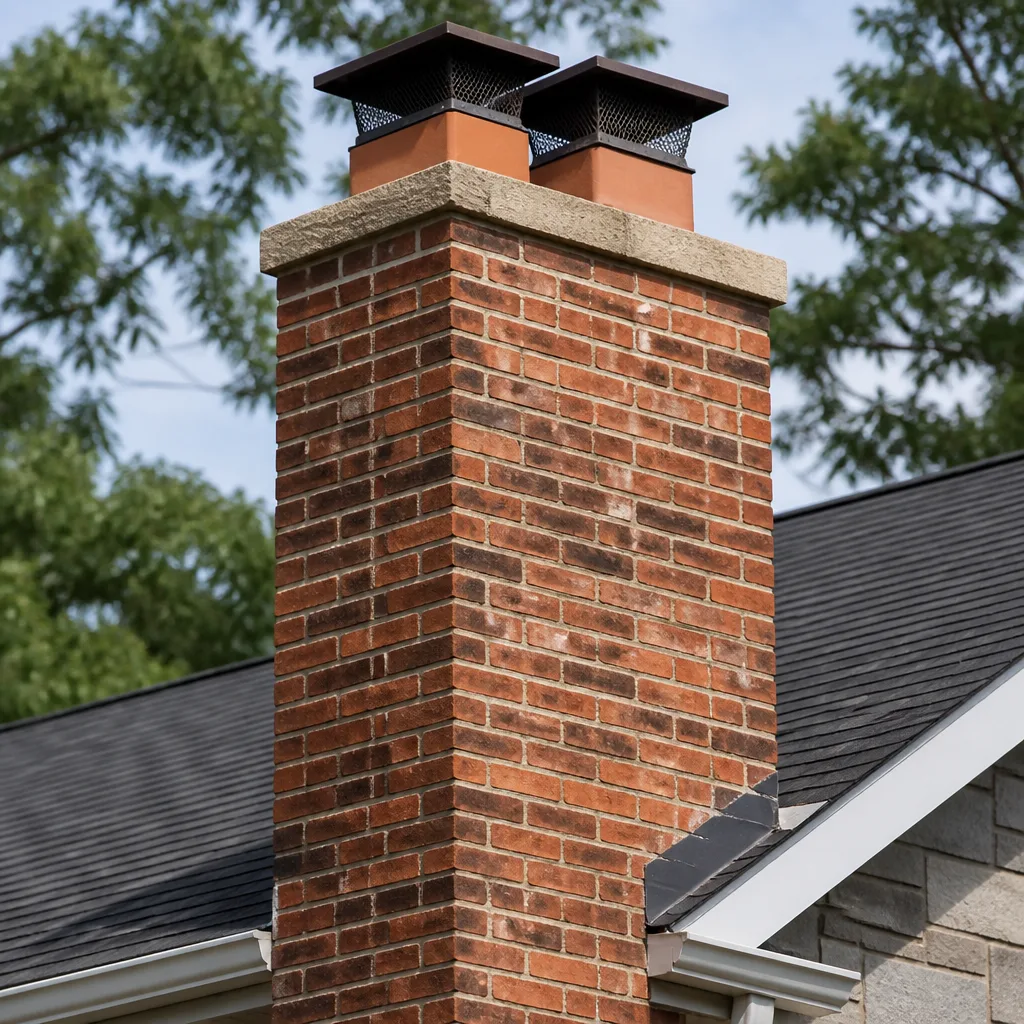
 Before
 After
After Before
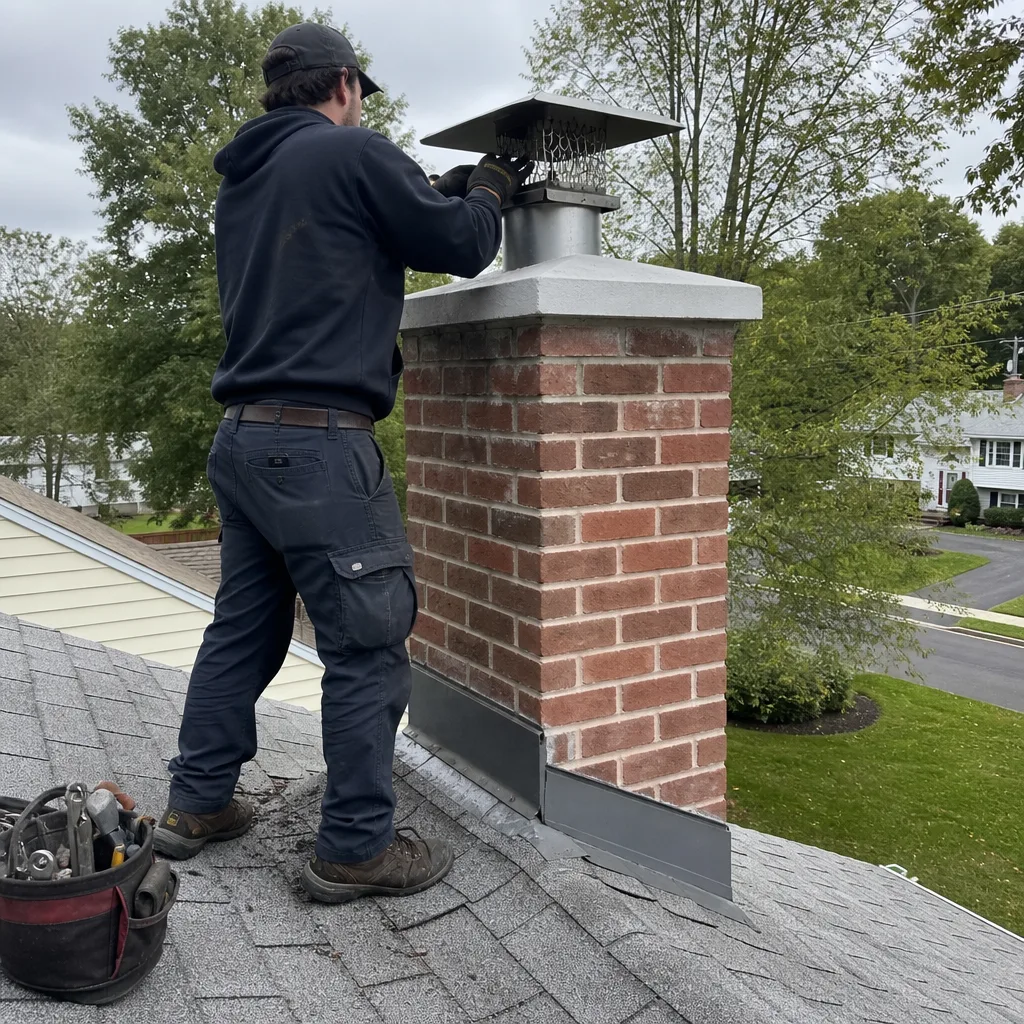 After
After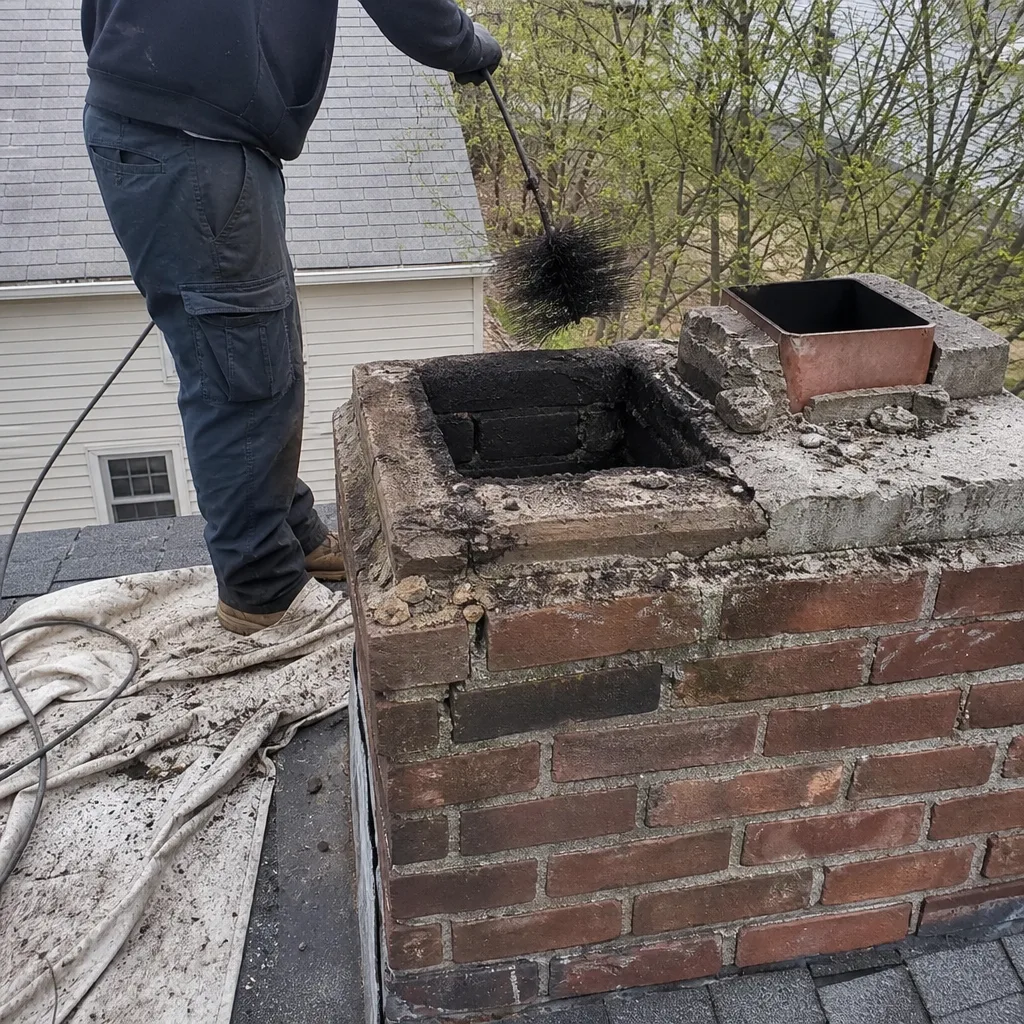 Before
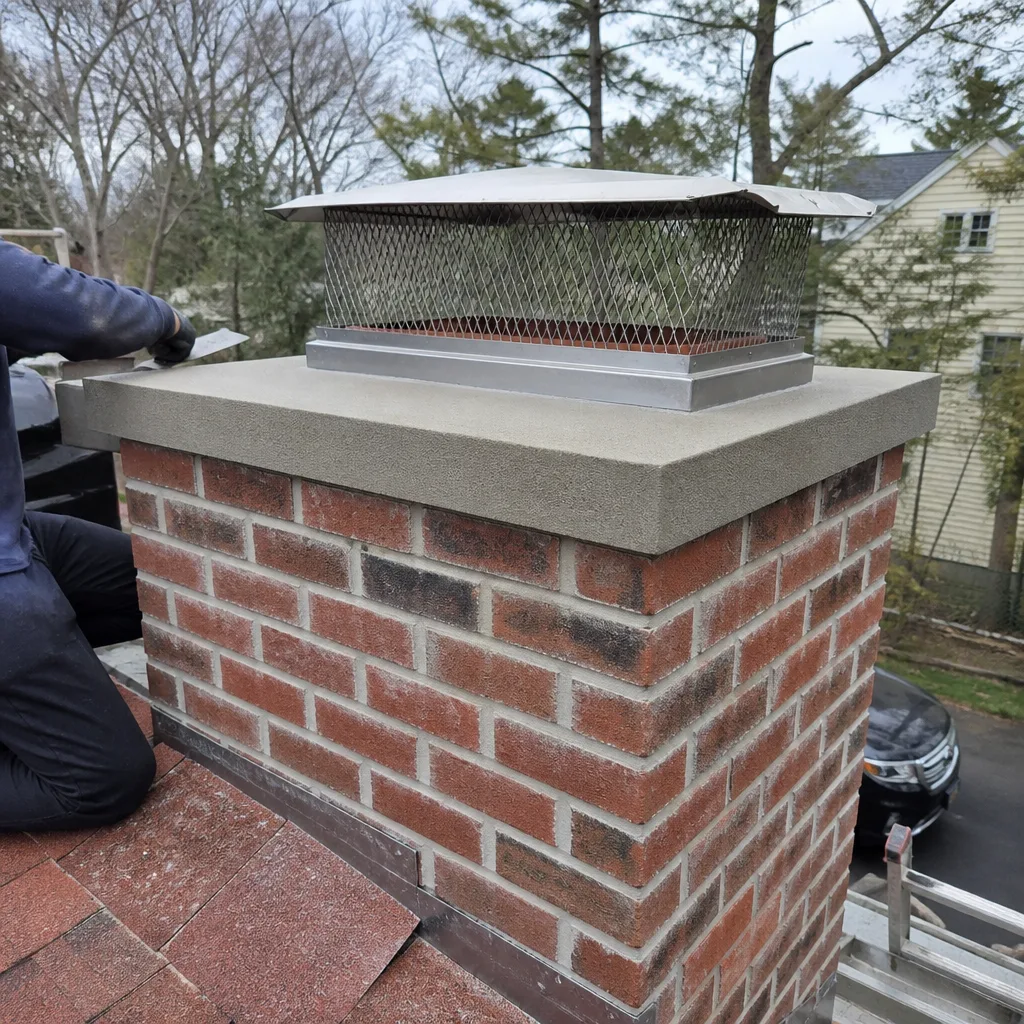 After
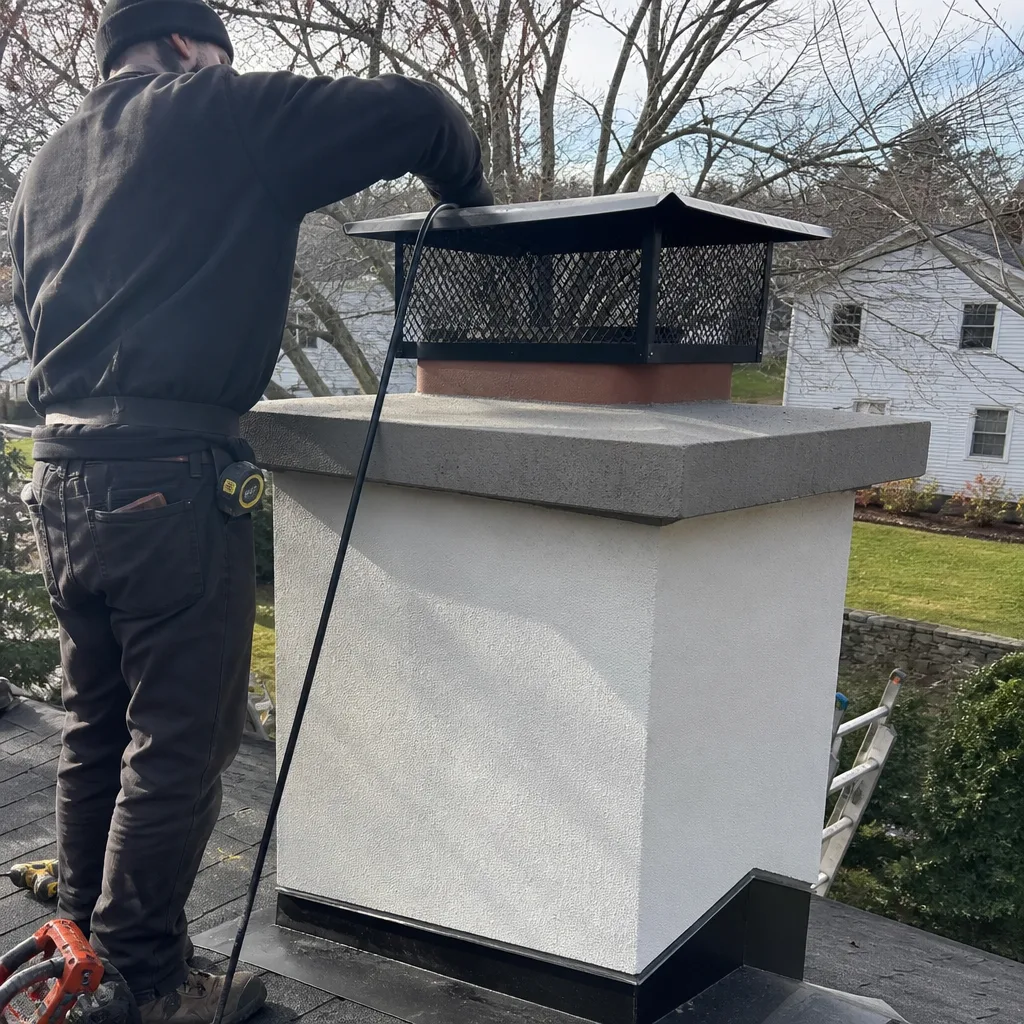
AfterDuraFlex Chimney Cap Installation: The Norwalk Owner’s Guide
If you’re holding a DuraFlex chimney cap that’s rusted through, bent out of round, or missing its screen, here’s the straight answer: we stock and install replacement caps compatible with most DuraFlex rigid liner systems in Norwalk, and a typical installed price runs $280-$460 depending on the cap size and whether your existing mounting collar can be reused. Most swaps take under an hour once we’re on the roof. You’ll usually find out the old one failed because water starts dripping through the firebox after a hard rain, or you spot chunks of rusted mesh in the gutter below the flue.
We’re an independent Norwalk chimney company, not a DuraFlex dealer. That means we’re not tied to one brand’s price sheet or stuck waiting on their warehouse. We can match a DuraFlex cap to your liner, or in plenty of cases recommend a quality aftermarket equivalent from Olympia or Copperfield that fits the same collar and holds up just as well in Connecticut weather. The right choice depends on what’s on your roof today.
Which DuraFlex Models This Applies To
DuraFlex makes two liner families that show up on Norwalk roofs: the standard stainless (304 alloy) and the upgraded 316L marine-grade, which holds up better within a few miles of the Sound where salt air eats ordinary steel. Your cap has to match the inside diameter of your liner, not the outside of your flue tile, and that’s where plenty of homeowners get cross-threaded. If you have a 6-inch liner, a 7-inch cap base isn’t going to seat right no matter how many screws you run through it.
Here’s the compatibility gotcha worth knowing: DuraFlex changed their cap collar design around 2014. The older caps used a slip-over band with three sheet metal screws. The newer ones use a four-point twist-lock system that only mates with their own collar. If your liner was installed before roughly 2014 and you order a new DuraFlex cap by part number, you may end up with a twist-lock that won’t grab. We check this on site before ordering. The label on the liner’s exposed section by the damper usually tells us what we need to know.
As for OEM versus aftermarket: DuraFlex OEM caps are fine steel, but you pay a brand premium. Olympia and Copperfield make caps in the same alloys with the same slip-over geometry, and they’re usually $30-$50 less for the same protection. On a 316L cap, the aftermarket save is bigger because of what the marine alloy costs at retail. We’ll give you both numbers and let you pick. There’s no wrong answer, just a budget question.
Signs Your DuraFlex Chimney Cap Installation Is Failing
- Rust streaks running down the cap body or collar. The cap’s thin stainless skin has given out and the underlying steel is oxidizing. Once it starts streaking, the screen mesh is usually not far behind.
- Water in the firebox after a heavy rain, even when the damper is closed. A failed cap lets rain pour straight down the liner. In East Norwalk’s older colonials, we see this all fall; the cap has been missing half its dome for a full year and nobody climbed up to look.
- Birds or squirrels inside the chimney. Your screen mesh has a hole. Squirrels in particular will widen a small tear with their teeth to get out of a windstorm. Now you’ve got a nest in your flue, which is a chimney fire waiting on a cold morning.
- Cap that’s visibly tilted, loose, or missing screws. High winds off the Norwalk River valley work caps hard. The twist-lock versions rarely loosen on their own, but the older three-screw collars do. A tilted cap stops shedding water and starts catching it.
- Draft problems that appeared suddenly. A cap whose mesh is plugged with creosote or nesting material won’t breathe. Your fire smokes, your glass doors soot up, and the smoke pours into the room instead of up the flue. The cap usually isn’t the only culprit, but on liner systems it’s frequently the first.
Replacement Cost & What’s Included
For a Norwalk home, you’re looking at $280-$460 installed for a DuraFlex-compatible cap swap. The spread comes down to three things: cap diameter (a 5.5-inch liner cap costs less than an 8-inch), alloy (316L for homes close to Long Island Sound runs higher than 304), and whether the existing collar can be reused. If the collar is still sound, we don’t replace it for the fun of it. If it’s cracked or stripped, the replacement adds $40-$70.
Every number we quote is the number on the invoice. You’ll know it before a tool comes off the truck. The price includes the cap itself, the collar if needed, fasteners, and the labor to get on the roof, remove the old one, seat the new one, and confirm the draft. We also check the top six inches of liner while we’re up there because a failed cap usually means water has been getting in for a while. If we see erosion, you’ll know it. That’s how Wendell Pike has run Top Hat Chimney since 1999.
The work carries our 90-Day Done Right Promise. If the cap shifts, whistles, or leaks inside 90 days, one call brings us back. No re-quote, no argument.
DIY or Call Us?
Chimney cap work is roof work, and roof work is where a careful homeowner can get hurt. A steep pitch on an older Norwalk two-story is not the place to find out your ladder is too short. We’ve been called out after more than one DIY attempt where the cap was the least of the problems: broken shingles around the chimney, a dropped socket wrench through a skylight, one twisted ankle on a clay tile that gave way. The cap itself isn’t dangerous to handle; the access to get to it is.
What you can do safely from the ground: look up with a decent pair of binoculars and check for rust streaks, missing mesh, or a tilted cap. That’s a worthwhile Sunday-morning inspection. If you see damage, call us at (475) 375-2748. We’ll climb up, take a look, and tell you honestly whether you need a new cap or just a tightened collar. “If it does not need doing, I will tell you.” That’s not a slogan. It’s how we stay busy in a small county where our reputation walks into the diner before we do.
FAQs
In coastal Connecticut you can expect 7-12 years from a standard 304 stainless cap, and 15-20 from a 316L marine-grade cap if it’s kept clean. Homes inland from the Sound get a little more life; homes right on the water get less. The screen usually fails before the dome. If your cap is older than a decade, it has earned a close look. Call (475) 375-2748 and we’ll check it the same week.
Sometimes, but rarely for less money. A torn screen can be re-meshed if the dome and collar are structurally sound, but by the time the mesh has holes, the cap’s usually near the end of its service life. We’ll show you the condition up close when we bring it down, and you can make the call with the part in your hand, not from a photo.
Under an hour, start to finish, for most Norwalk installations. The work is simple once the ladder is set. We schedule a real arrival window, not “sometime between sunrise and dinner,” and if we’re running late, a live person calls you. The number is (475) 375-2748.
Our trucks carry common liner caps in standard sizes, and we keep a broader stock at our shop for Norwalk service calls. For odd sizes or marine-grade 316L, we typically order and install within a few business days. HeatShield and Gelco supplies are on the same truck if your liner ends up needing more than a cap.
If you’ve got a failed DuraFlex cap sitting on your roof and a growing puddle under your flue, don’t wait for the next storm. Call (475) 375-2748 for a firm quote. We’ll tell you what you need, what it costs, and what can wait. No trip charge inside the county, and a free second opinion on any written estimate from a competitor.
Written by Wendell Pike, Owner, Top Hat Chimney at Top Hat Chimney, serving Norwalk and nearby areas.