
Last updated September 10, 2026
Level 1 sweep and inspection to the NFPA 211 annual standard - flue, crown, cap, and flashing checked and photographed
Chimney sweep logs do not sweep chimneys. They loosen some creosote - which then falls where a brush and vacuum still have to collect it.
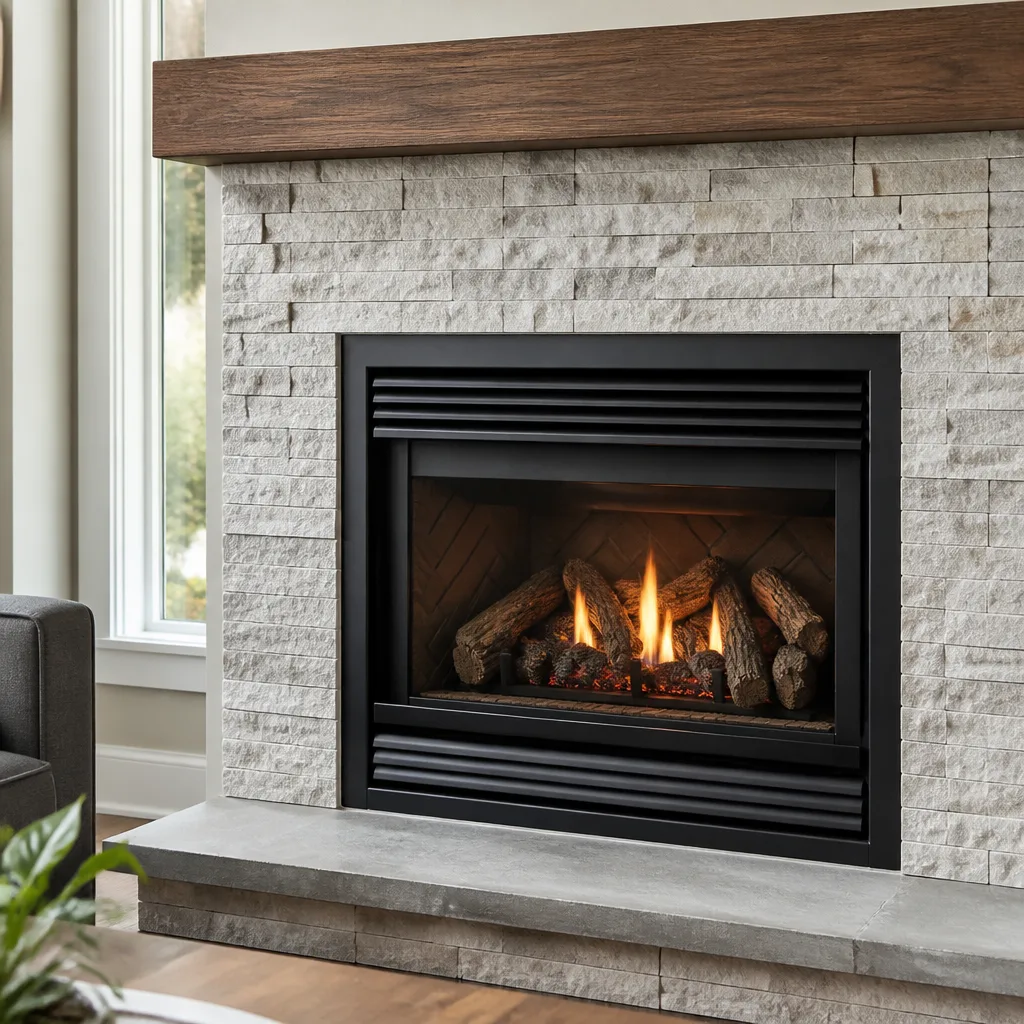
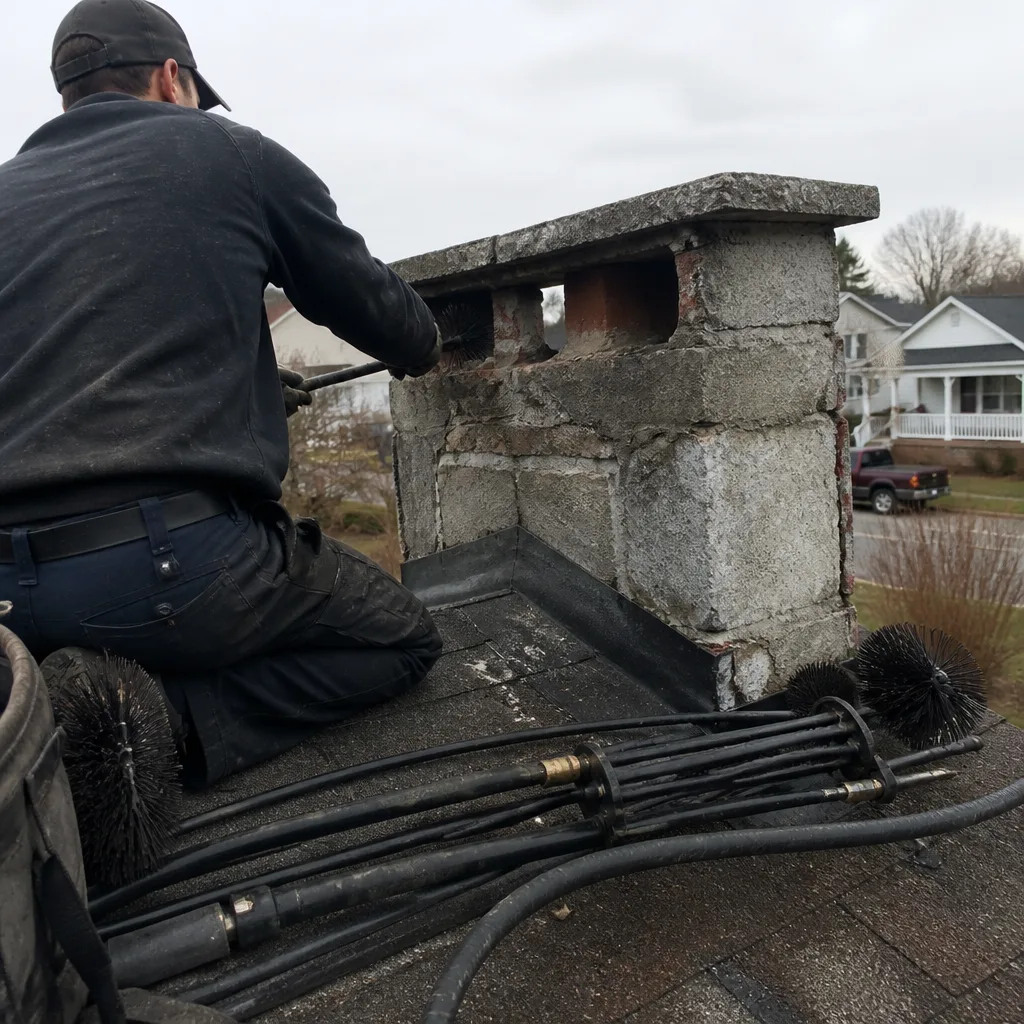 Before
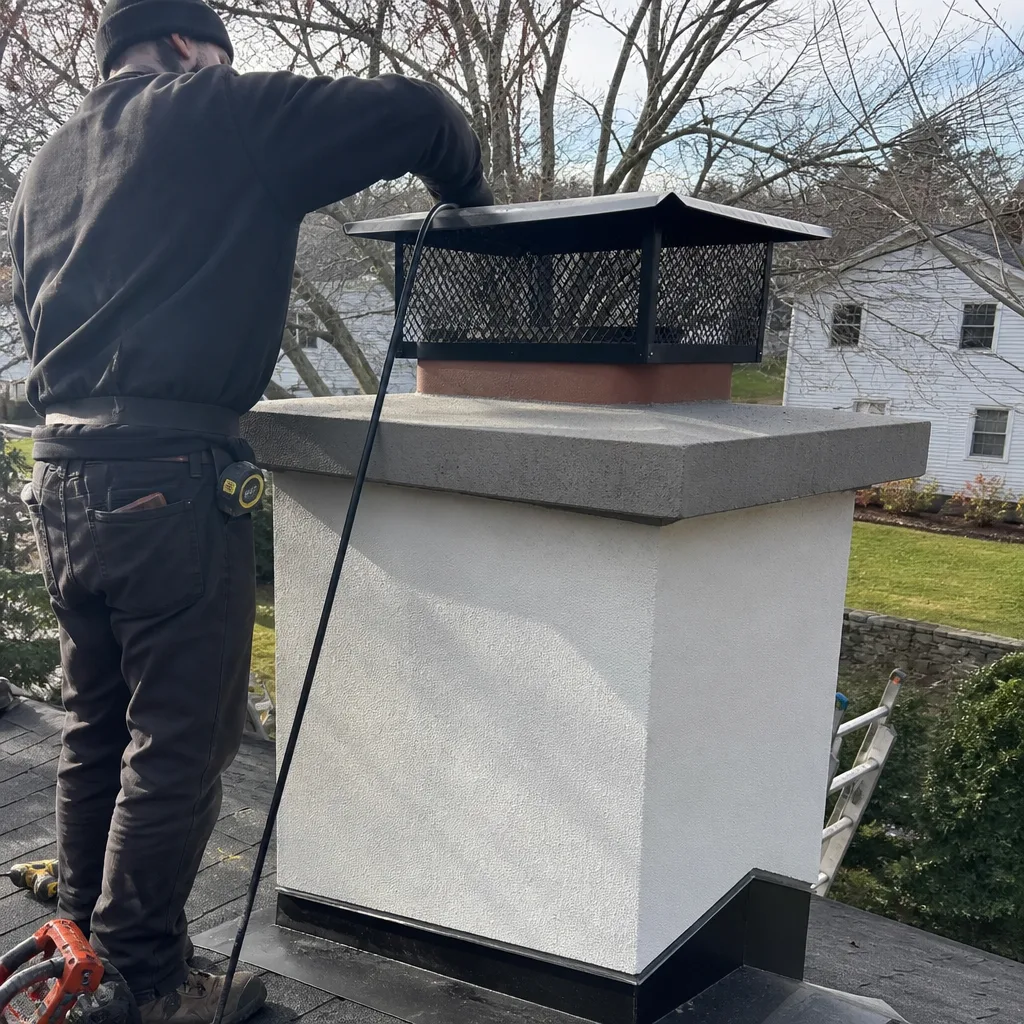 After
After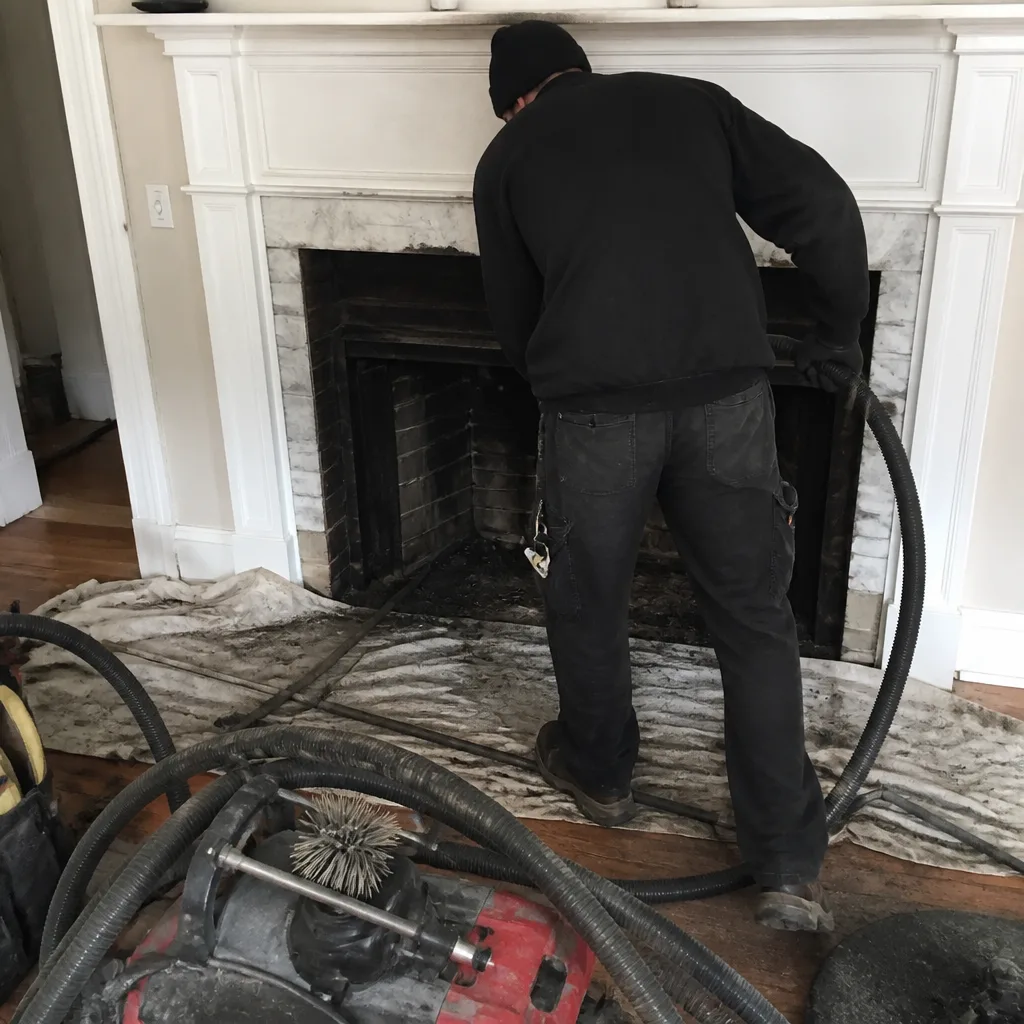 Before
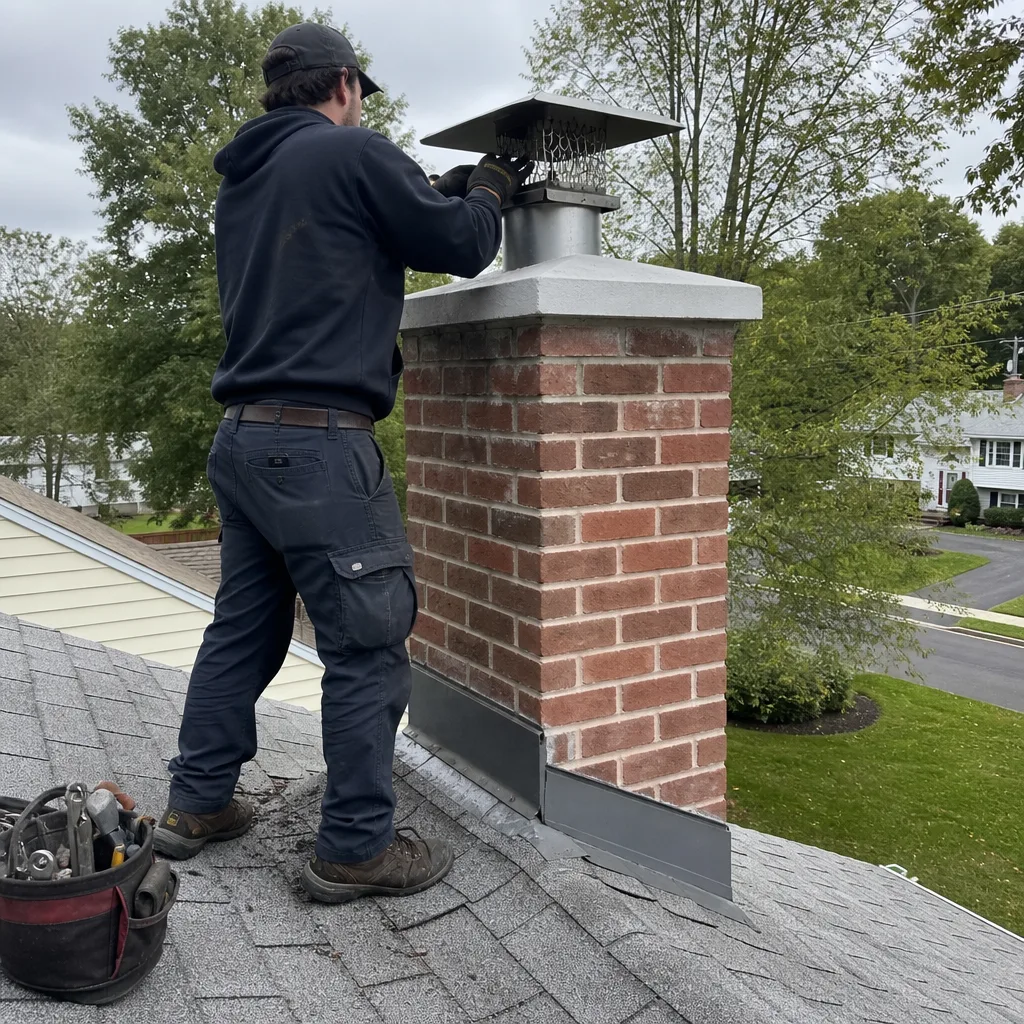 After
After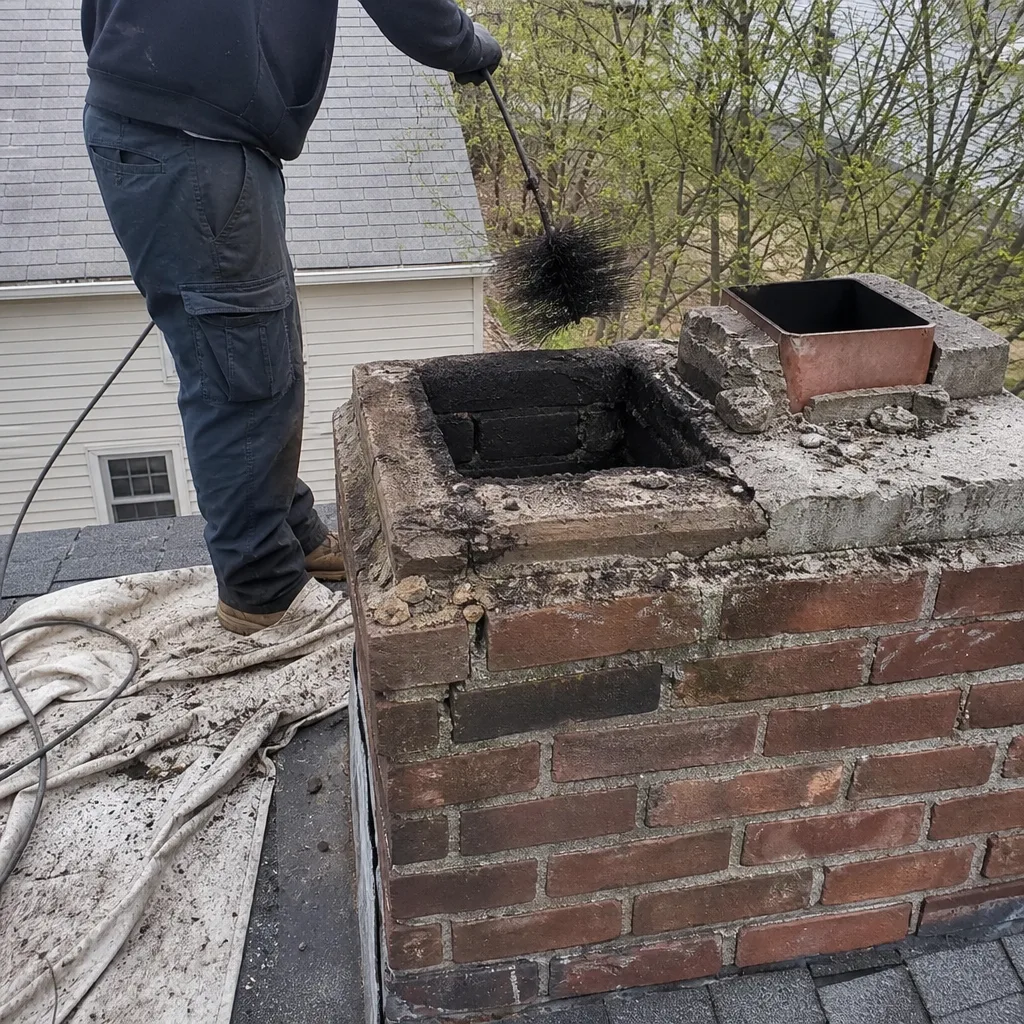 Before
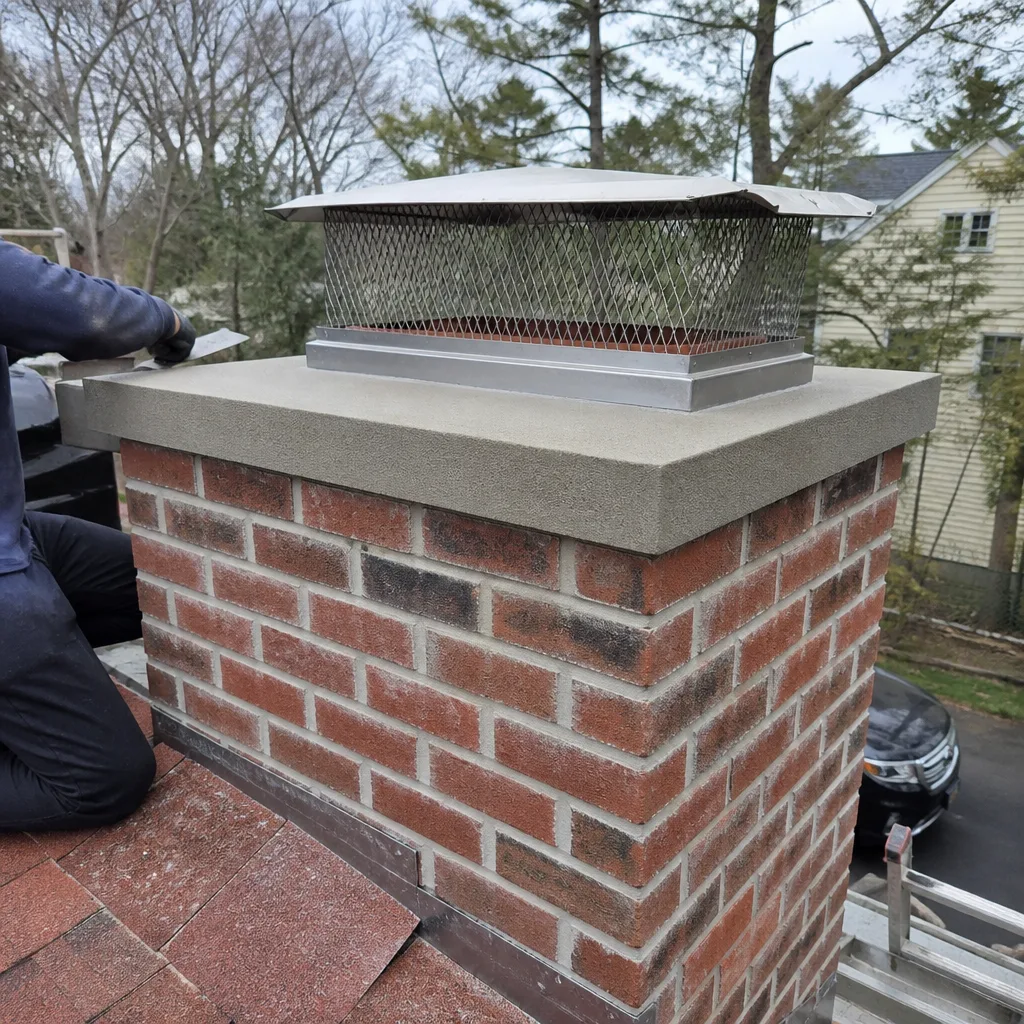 After
AfterChimney Cleaning & Sweep Maintenance Checklist for Norwalk Homeowners
Of every ten service calls I take in Norwalk, at least three could have been caught earlier by the homeowner just looking at the right spot on the right day. It’s not that they weren’t paying attention. It’s that nobody told them where to look. This guide fixes that. You’ll learn exactly what a sweep checks at the door before he ever lights a flashlight, translated into plain language you can use yourself between Chimney Cleaning & Sweep visits. No roof climbing, no special tools, no guesswork. Just the specific things that go wrong in Norwalk chimneys, season by season, and how to spot them early.
Quick Answer
A chimney maintenance checklist for Norwalk homeowners boils down to this: check the firebox floor and damper before first burn each fall, look for dark sticky residue on the damper plate and smoke shelf whenever you can reach them safely, inspect the exterior masonry and cap from the ground with binoculars every spring and fall, and schedule a professional sweep once a year whether you burned heavily or not. Creosote builds up even in mild winters, and Norwalk’s damp shoulder seasons are when small leaks turn into expensive masonry repairs. Run through the interior checks in October, do the exterior walkaround in March and October, and keep a one-page log of what you find.
Table of Contents
- The Interior Checklist: What to Check at the Damper, Smoke Shelf, and Firebox Floor
- The Exterior Checklist: What You Can See from the Ground with Binoculars
- Seasonal Timing in Norwalk: Why October and March Matter Most
- Red Flags: Stop Using the Fireplace Today vs. Mention to the Sweep
- The Annual Inspection Log: Write It Down, Spot Trends Early
- Understanding Creosote: First-Degree Is a Brush Job, Third-Degree Is a Glaze
- Common Mistakes to Avoid
- When to Call a Professional
- Frequently Asked Questions
The Interior Checklist: What to Check at the Damper, Smoke Shelf, and Firebox Floor
Before you burn a single log in Norwalk this fall, these three spots tell you most of what you need to know. We check all three on every chimney cleaning and sweep in Norwalk, and a homeowner can check the first two with a flashlight and a pair of eyes.
The damper plate. Open it all the way and shine a light up. You’re looking at the metal plate that swings or slides to open and close the flue. A thin dusting of gray powder is normal. What you don’t want to see is dark brown or black flaky buildup that looks like coffee grounds, or anything glossy and tar-like. That’s creosote, and it means the fire wasn’t burning as clean as it should have. Run a fingertip across the plate if you can reach it. If it comes away greasy, you’re at second-degree creosote. If the surface has a shiny, hardened glaze, that’s a different animal entirely. More on that below.
The smoke shelf. This is the flat ledge just above the damper, where the firebox narrows into the flue. You can’t always see it from the firebox, but if you can angle a mirror up there, do it. Debris collects here: leaves, twigs, sometimes a bird’s nest, and always at least some creosote. A little loose debris is a sweep job. A lot of it, especially if it smells damp or looks matted, means the cap isn’t doing its job and the chimney has become a convenient place for nor’easter rain to collect.
The firebox floor. Look for cracked firebrick, missing mortar joints, and any section of the floor that’s sunk or uneven. Hairline cracks in the firebrick are common and usually cosmetic, but a crack wide enough to slide a quarter into, or a floor that’s shifted, can mean the firebox has been taking on water and the masonry is moving. In Norwalk, freeze-thaw cycles are the usual culprit. Water gets into a hairline crack, freezes, expands, and pries things apart over one winter.
Three things, ten minutes, and you’ve done more than most homeowners do all year. Write down what you find. You’ll use it later.
The Exterior Checklist: What You Can See from the Ground with Binoculars
You don’t need to get on the roof. I’ll say that again because it matters: you don’t need to get on the roof. A decent pair of binoculars from the yard or street gives you a clear view of every exterior checkpoint that matters, and it keeps you off a ladder that doesn’t belong on wet Norwalk pavement in March.
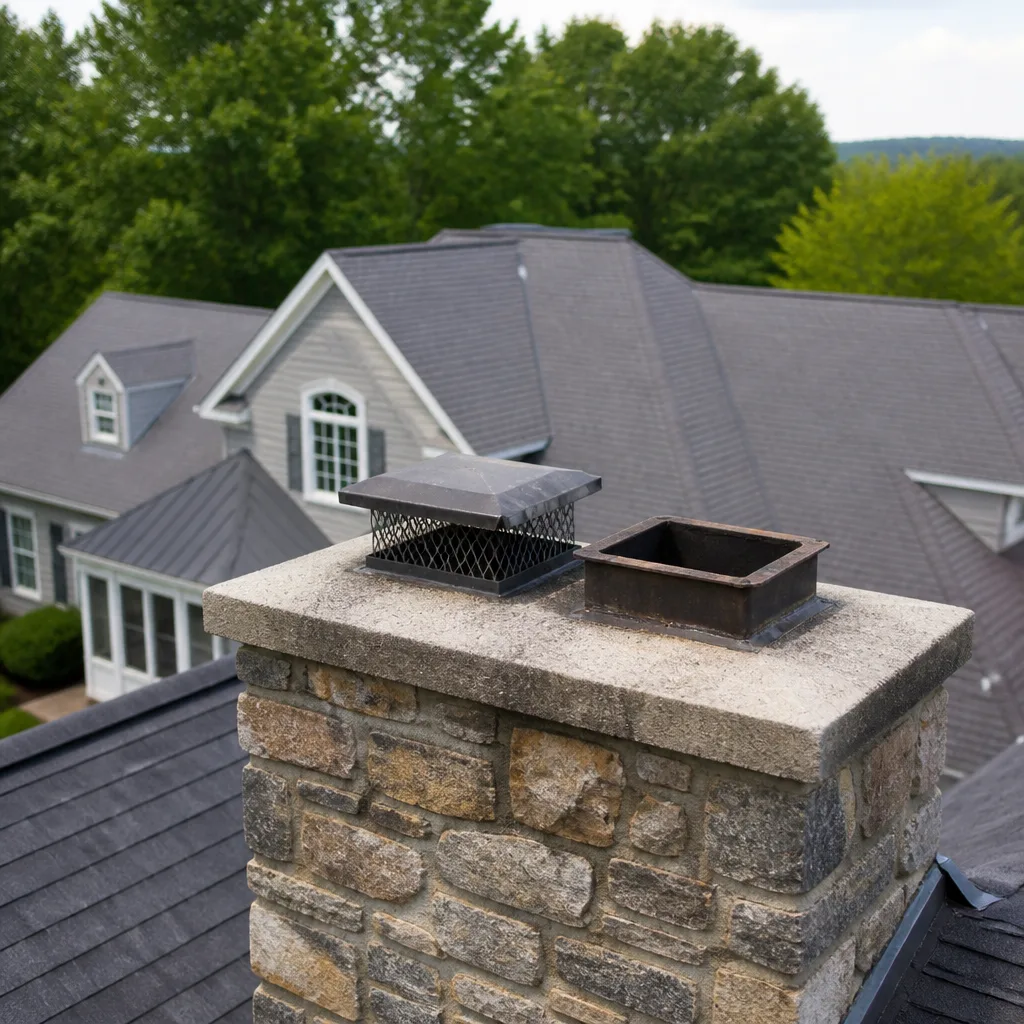
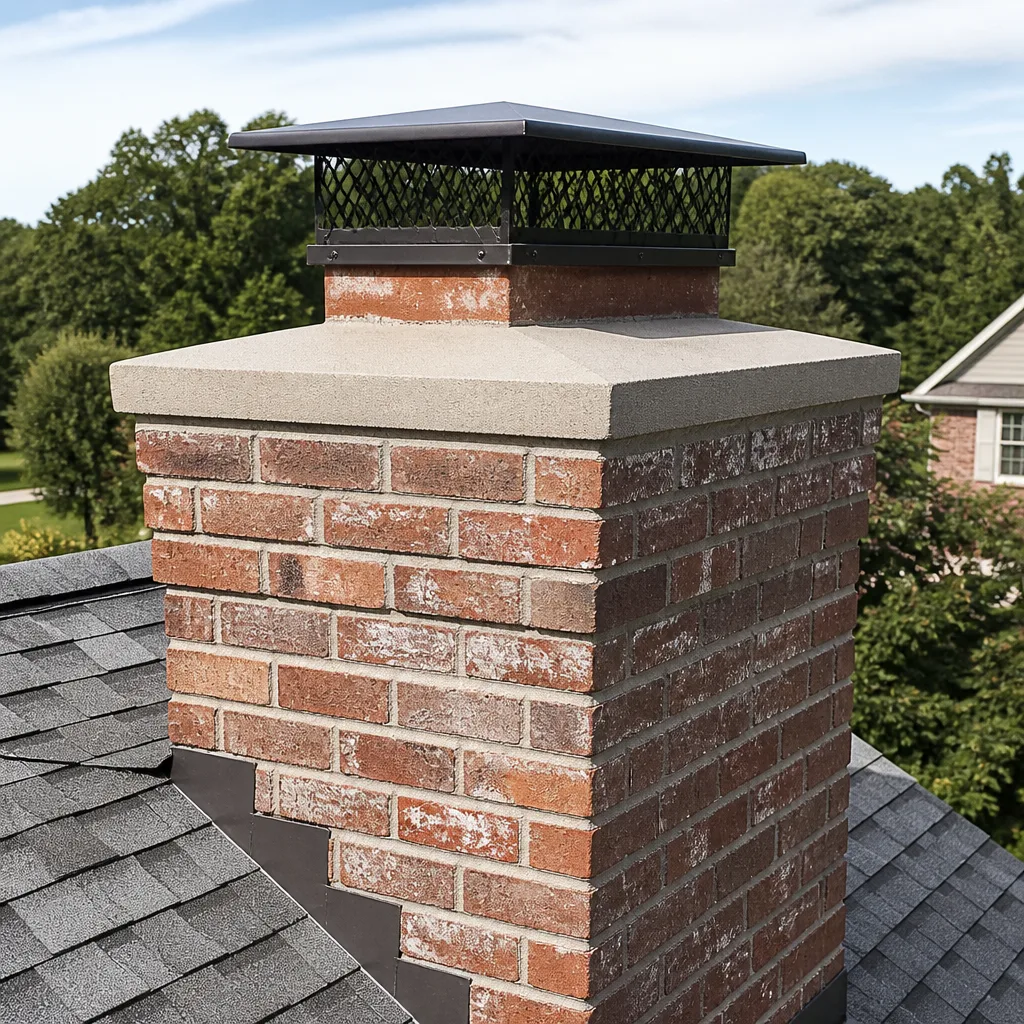
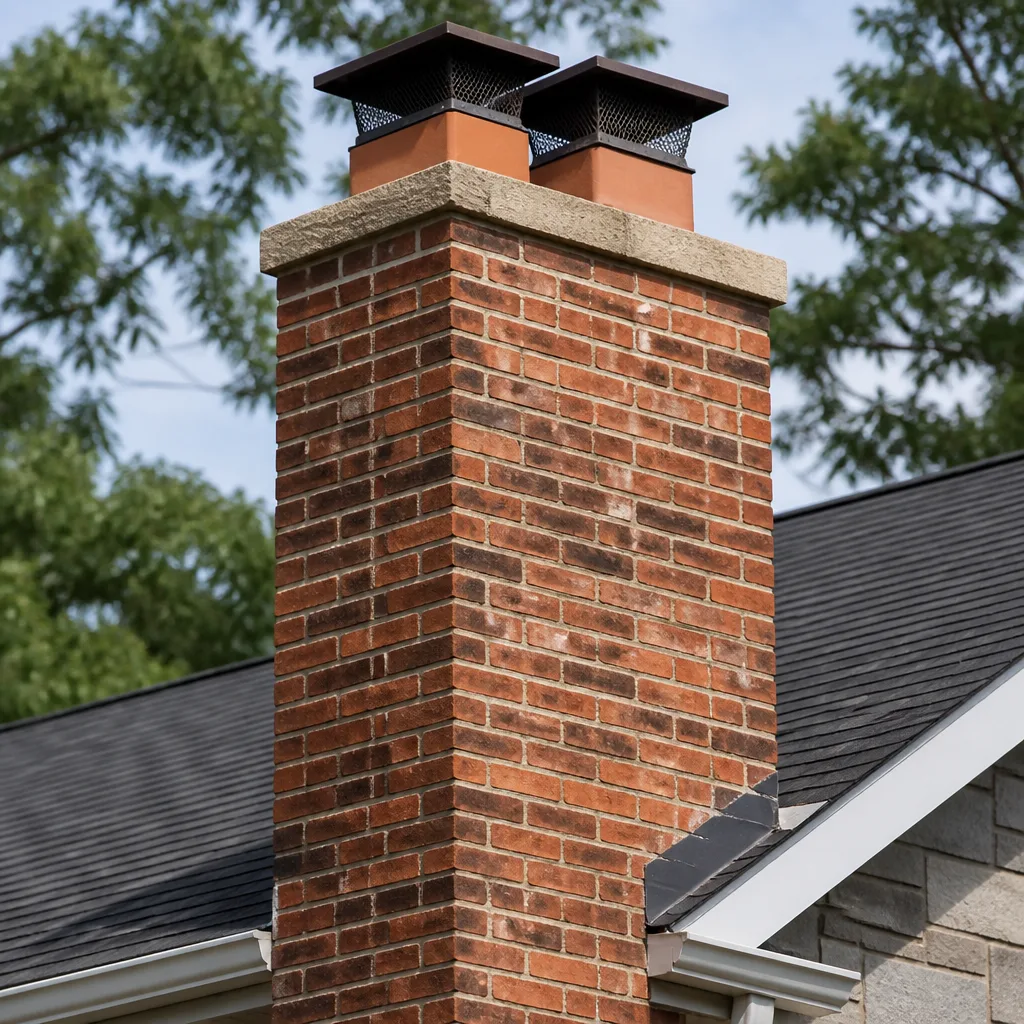
- The cap. Look for a cap that’s missing, tilted, or rusted through. The cap keeps rain, snow, leaves, and animals out. A missing cap means everything that falls from the sky goes straight down your flue onto the smoke shelf, accelerating creosote damage and rusting out the damper. We install and service caps from Gelco and Olympia Chimney, and a replacement cap is one of the cheapest things you can do that prevents thousands in downstream repairs.
- The crown. The crown is the concrete slab that seals the top of the chimney around the flue. Look for cracks, spalling (where the surface is flaking off), or a crown that’s pulling away from the flue liner. A cracked crown lets water into the chimney chase, and that water follows gravity down into your firebox. In Norwalk’s freeze-thaw winters, a crown crack goes from hairline to structural in one season.
- The masonry joints. Run your binoculars slowly up and down the brickwork. Look for missing mortar, white powdery stains (efflorescence, which means water is moving through the masonry), and any brick face that’s popped off. Spalled brick faces are a sign the brick has absorbed water and frozen. Once spalling starts, it doesn’t stop on its own.
- The flashing. This is the metal where the chimney meets the roofline. Look for rust, lifted edges, or gaps. Flashing failure is one of the most common sources of chimney-related leaks we find on chimney repairs in Norwalk, and it’s often mistaken for a roof problem.
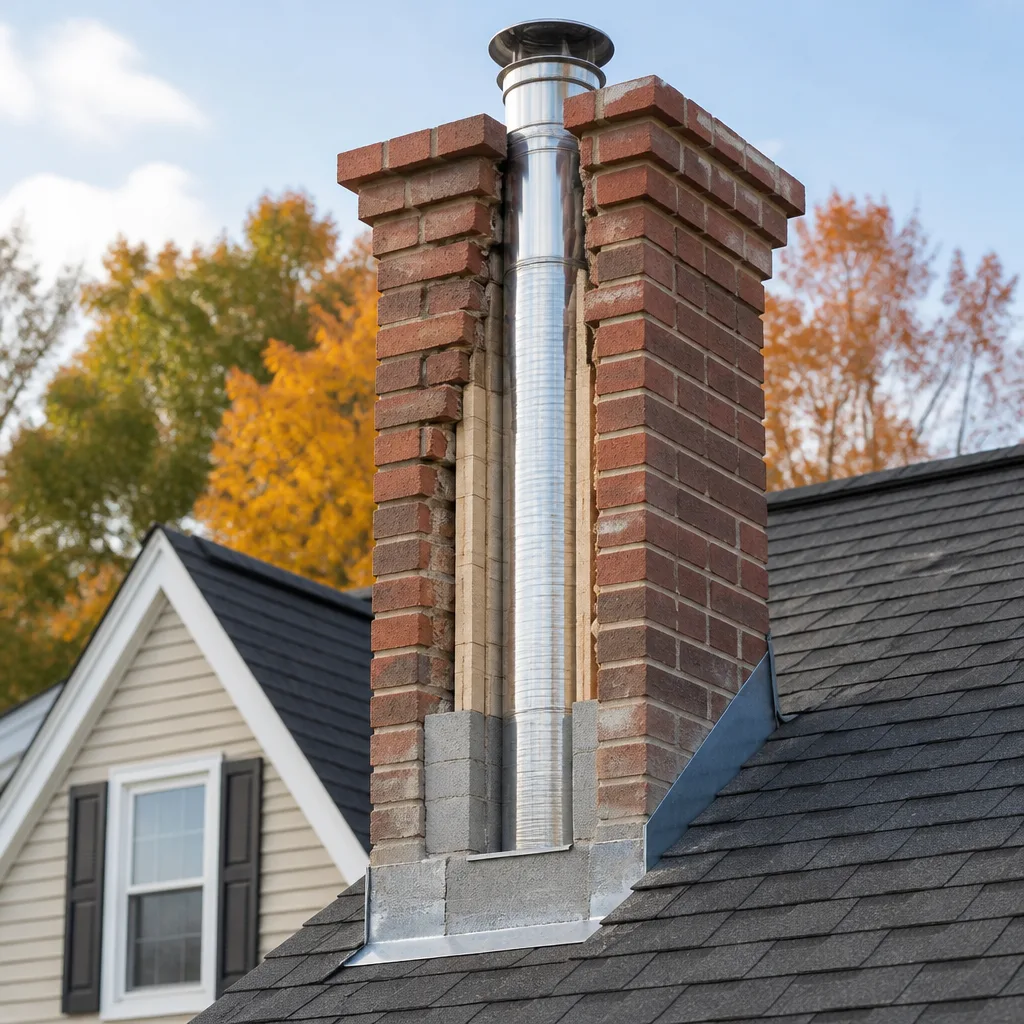
- The flue liner. From the ground, you can look down into the flue if the cap is missing or if you have a clear angle. You’re looking for any visible cracking or sections of liner that look separated. Most liner damage isn’t visible from the ground, but if you can see it, it’s already advanced.
Five checkpoints, all from the ground, all in about fifteen minutes. If anything on this list looks wrong, that’s not a panic situation by itself. But it goes in the log and on the list to mention when the sweep comes.
Seasonal Timing in Norwalk: Why October and March Matter Most
Chimneys don’t break on a schedule, but in Norwalk they come close. We see two spikes in service calls every year, and they line up exactly with the shoulder seasons.
October. This is first-burn season. The first time you light the fireplace after eight months of sitting cold, any problem that developed over the summer announces itself, usually as smoke rolling back into the room or a smell you can’t place. October is also when Norwalk’s humidity starts its fall climb, which means creosote that sat all summer has had time to absorb moisture and get sticky. Sticky creosote attracts more creosote, and the cycle accelerates. If you’re going to be a once-a-year chimney household, October is the month to have it swept, before the burning season starts in earnest.
March. This is the month freeze-thaw damage shows itself. All winter, snow melts and refreezes in every crack and joint. By March, the damage is done and the evidence is visible: efflorescence on the brick, a new crack in the crown, spalled brick faces. March is also when homeowners light the last fires of the season and notice the damper sticking, the smoke shelf dripping water, or a creosote smell that’s stronger than it should be. March is the month to do the exterior binocular check and decide what needs attention before next fall.
Once a year, burn or no burn. Chimneys break in the off-season too. A wet June and a wet November will do more damage to a chimney in Norwalk than a heavy burning season will.
Red Flags: Stop Using the Fireplace Today vs. Mention to the Sweep
Here’s the plain distinction. Some things mean the fireplace is safe to use and just needs attention on the next visit. Other things mean you stop burning until a sweep has looked at it. This is the list I give homeowners when they ask me where that line is.
Stop using the fireplace today:
- Smoke rolls back into the room even with the damper fully open. That means the flue isn’t drawing, and the usual causes are a blocked flue, a damper that’s not opening all the way, or a chimney that’s too cold to establish draft. It also means carbon monoxide is not leaving the house the way it should.
- You can see thick, shiny, tar-like creosote on the damper or firebox walls. Third-degree creosote is flammable at lower temperatures than you think. It’s the number one cause of chimney fires, and it needs to come out before you burn again.
- You hear or see evidence of animals: scratching, chirping, nesting material falling into the firebox. Burning a nest is a fire hazard, and some birds are protected species you can’t legally disturb during nesting season. Leave it alone and call.
- Water is dripping into the firebox or you see a puddle on the smoke shelf. Burning in a wet chimney accelerates creosote formation and corrodes the damper and liner. Whatever is leaking needs to be found first.
- You smell gas if you have a gas fireplace or gas logs. Turn off the gas at the shutoff valve and call a professional, same day.
Mention when the sweep comes:
- A mild creosote smell in the room when the fire isn’t burning, especially on humid days.
- Hairline cracks in the firebrick that haven’t widened.
- A damper that’s stiff but still moves through its full range.
- Light efflorescence on exterior brick, meaning early-stage water movement.
- Any crack in the crown, no matter how small it looks from the ground.
- A slight rust color on the damper or firebox grate, meaning condensation is present.
This list is the difference between a $50 problem and a $5,000 one. When in doubt, write it down and ask. The sweep who shows up at your door would rather answer a question than pull out a hose to put out a chimney fire.
The Annual Inspection Log: Write It Down, Spot Trends Early
Nobody remembers what the damper looked like last March. That’s why the single most useful thing you can do for your chimney is keep a one-page log you update twice a year. You don’t need a form or an app. A piece of printer paper taped inside a kitchen cabinet works fine.
Here’s the format:
- Date and what you’re logging. “October 12 - pre-burn interior check.”
- Damper. What did the surface feel like? Dry and powdery, flaky, greasy, or glazed?
- Smoke shelf. Debris or not? How much? Damp or dry?
- Firebox floor. Any new cracks, or have the existing cracks changed? Measure hairline cracks with a quarter: if the quarter slides in, note it.
- Exterior. Cap condition, crown condition, mortared joints, flashing. Any changes from the last check?
- Trend. One line: “Same as March” or “More creosote than last fall.”
What you’re doing here is creating a trend line. A crack that hasn’t moved in three years is a different animal than a crack that grows a quarter-inch every spring. Creosote that was dry last year and greasy this year means something changed in your burning habits or your wood. When you hand this log to the sweep, you’ve just saved fifteen minutes of inspection time and made sure nothing gets missed. We love seeing a homeowner’s log. It tells us you’ve been paying attention, and it means the conversation starts from facts instead of guesses. For more guides & resources, see our blog.
Understanding Creosote: First-Degree Is a Brush Job, Third-Degree Is a Glaze
Creosote is what’s left after wood smoke cools and condenses on the flue walls. It’s not one substance. It’s three stages, and each one calls for a different response.
First-degree creosote is the powdery, dusty, gray or brown film that brushes off easily. It’s what you’d expect from a normal season of burning dry, seasoned hardwood. A standard chimney sweep takes this out with a brush and a vacuum. It’s maintenance, not a problem.
Second-degree creosote is flaky and crunchy, like dry coffee grounds that have been packed down. It comes from fires that burned a little cooler or wood that was a little wetter than it should have been. It takes more effort to remove, and it often means the flue wasn’t getting hot enough to keep the creosote from condensing. Second-degree is a warning sign about how you’re burning. Fix the wood, fix the draft, and it goes back to first-degree.
Third-degree creosote is the glaze. It’s shiny, tar-like, and it hardens into a shell on the flue walls. It forms when creosote gets hot enough to melt and then cools again, over and over. Third-degree creosote is a fire hazard waiting for a hot burn to ignite it. It can’t be brushed out. It takes chemical treatment or mechanical rotary cleaning with a chain whip head, and sometimes a liner replacement if the glaze has bonded to the flue. This is where the money is, and this is what happens when a chimney goes unswept for years.
First-degree creosote is a brush job. Third-degree is a glaze. Catch it early. The only way to know which one you have is to look, and the only way to look properly is with a professional sweep who has the right tools. We’ve swept chimneys in Norwalk where the homeowner had no idea the flue was lined with half an inch of hardened glaze until we showed them the camera footage.
Common Mistakes to Avoid
- Assuming no fires means no creosote. Creosote from last season doesn’t disappear. It sits there, absorbs humidity, and gets stickier. A chimney that hasn’t been burned in a year can be as dirty as one that burned every weekend.
- Burning pine or scrap lumber because it’s free. Pine and construction lumber burn hot and fast, but they also produce resinous creosote that coats a flue faster than seasoned hardwood. Free wood is often the most expensive wood.
- Closing the damper too soon after the fire dies. The embers are still off-gassing. Closing the damper traps that smoke in the chimney, where it cools and condenses into creosote. Wait until the embers are white and you can’t see any glow.
- Ignoring a stiff damper. A damper that’s getting harder to open is telling you something: rust, debris, or warping. It will not fix itself, and a damper stuck open in January is a heating bill that never ends.
- Letting water leaks “wait until spring.” In Norwalk, water that gets into the masonry in November freezes and thaws a dozen times before March. Every freeze widens the crack. Waiting until spring means paying for a brick repair instead of a crown seal.
- Assuming the sweep’s camera is optional. A professional sweep should show you what the flue looks like before and after. If someone sweeps your chimney and can’t show you the inside, you have no way to know if they actually did the job. We show camera footage on every job, no exceptions.
- Booking the sweep the week before Thanksgiving. Every chimney sweep in Norwalk is booked solid the week before Thanksgiving. Schedule in September or early October, and you’ll get the appointment you want instead of the one that’s left.
When to Call a Professional
You’ve done the interior checks, done the exterior binocular walk, logged everything, and something doesn’t look right. Now what? If you found any item on the “stop using the fireplace today” list, that’s a call. If you found third-degree creosote or water in the firebox, that’s a call. If the log shows a crack that’s grown or creosote that’s changed from flaky to greasy, that’s a call. And if you haven’t had a professional sweep in more than twelve months, that’s a call too, because an annual sweep is the cheapest money you’ll ever spend on your chimney. Top Hat Chimney offers free estimates in Norwalk. Call (475) 375-2748 and Wendell or someone from his crew will talk you through what you’re seeing, no charge, no pressure. If it can wait, we’ll tell you it can wait.
Frequently Asked Questions
Once a year, regardless of how much you burn. The National Fire Protection Association recommends annual inspection and cleaning as needed, and in Norwalk’s humid climate, we recommend the sweep happen in early fall before burning season starts. If you burn more than three cords a winter or burn unseasoned wood, you may need a mid-season sweep as well. Call (475) 375-2748 to schedule yours before the October rush.
A standard chimney sweep in Norwalk typically runs between $200 and $350, depending on the condition of the flue, the amount of creosote, and whether you have an open fireplace or a wood stove. Third-degree creosote removal, animal removal, or liner repair adds cost. Top Hat Chimney gives you a firm price before any tool comes off the truck, and that’s the price on the invoice. Call (475) 375-2748 for an exact quote.
Not unless the camera shows you one. A liner needs replacement if it’s cracked, spalling, or separating at the seams, and you should see that damage on camera before you write a check. Some companies quote a liner replacement on every visit. We don’t. If your liner is intact, we’ll tell you it’s intact and show you the footage. If it needs work, we’ll show you exactly why. Free second opinions on any written estimate are always available.
Creosote builds up, absorbs moisture from Norwalk’s humid air, and becomes stickier and denser. Over time it hardens into third-degree glaze, which is a chimney fire waiting to happen. The longer it goes, the more expensive the removal. A chimney that would have cost $250 to sweep three years ago can cost $1,500 or more once the glaze sets in. Skip a few years and the math gets worse every season.
You can sweep loose first-degree creosote with a brush from the roof, but I don’t recommend it for most Norwalk homeowners. Getting on a roof in the fall is dangerous, and you won’t be able to see the smoke shelf, the damper, or the lower flue from up there anyway. What you miss is what causes fires. For the same price as a decent meal out, a professional sweep does it safely with the right equipment and shows you the camera footage. It’s not a place to save money.
Every job Top Hat Chimney completes, from a basic sweep to a full fireplace service in Norwalk, is backed by a written 90-Day Done Right Promise. If the work isn’t right, one call brings Wendell and his crew back at no additional cost. It’s stamped on every invoice, and it’s good for ninety days from the day the job is done. That’s the difference between a local sweep who runs into you at the hardware store on Saturday and a national chain that won’t call you back.
The Bottom Line
Your chimney doesn’t need a complicated maintenance routine. It needs you to look at the right spots twice a year, write down what you see, and call a sweep once a year to do what you can’t see or safely reach. The damper, the smoke shelf, the firebox floor, and the five exterior checkpoints from the ground. October and March, every year, no exceptions. If you do that, most chimney problems get caught while they’re cheap. If you don’t, the chimney will eventually tell you, and by then the repair bill is doing the talking. You know where to start. The Top Hat Chimney home page has more on who we are and what we do, and the phone number is (475) 375-2748.
Written by Wendell Pike, Owner at Top Hat Chimney, serving Norwalk since 1999.